Mini Biscoff Swiss Rolls


These mini Biscoff Swiss rolls are made of a soft, airy sponge with just a hint of cinnamon, rolled in cream and dipped in melted Biscoff. They look fancy but are easy to make, and they’re just right for a birthday, brunch or any time you want a cookie butter treat.
Heb je dit recept gemaakt? Laat ons weten wat je ervan vond
How to Get a Light, Fluffy Sponge
The secret to a light, fluffy sponge is beating the eggs and sugar for a long time. You need a full 7 to 10 minutes on high speed, until the mixture is pale, thick and about tripled in size. That trapped air is what makes the cake rise, since the batter has only a little baking powder. A stand mixer helps a lot here. It does the work for you and whips more air into the batter than you could by hand.
A few small things make a big difference. Use room-temperature eggs, because they whip up higher and fluffier than cold ones. Make sure your bowl and beaters are completely free of grease, since even a trace of fat keeps the eggs from whipping up properly. Use regular granulated sugar and a finely milled all-purpose flour. The finer the flour, the lighter the sponge. For the airiest texture, sift the flour and baking powder together two or three times, then fold them in gently with a spatula instead of stirring. That way you keep all the air you just whipped in.
How to Roll It Without Cracking
Rolling is the step where most people run into trouble, because the sponge can crack or tear. The good news is that a few simple habits make it almost foolproof. If you’d rather skip the sponge altogether, try my no-bake Biscoff cake roll or this no-bake Raffaello roll cake, with no oven and no cracking.
It starts with baking. Lightly grease the parchment paper with butter so the sponge comes off the paper easily. If the cake still sticks to the paper, it probably needed a little more time in the oven. At the same time, don’t overbake it. A sponge that bakes too long dries out and cracks when you roll it, so take it out as soon as it springs back when you touch it.
While the cake is baking, lay a damp kitchen towel over a wire rack. When the cake comes out, flip it straight onto the towel and peel off the parchment. The damp towel keeps the sponge soft and moist so it stays flexible, and the rack lets steam escape from underneath so the cake doesn’t get soggy.
Then roll the sponge while it’s still warm. A warm sponge bends easily without cracking. Rolling it right away also “trains” the cake into a spiral shape, so it remembers that shape later. You can roll it up in the damp towel or in a sheet of parchment paper, whichever you prefer.
Once it’s rolled, put it in the fridge for at least 30 minutes. This sets the shape, so the sponge stays curved and is less likely to crack when you unroll it to fill it. It also makes sure the cake has cooled completely before the cream goes on, so the cream won’t melt and slide off the sponge.
More Swiss Roll Recipes to Try
Once you’ve got the hang of rolling a sponge, there are plenty more flavors to try. If you love Biscoff, my classic Biscoff roll cake is a full-size version with a brown sugar sponge and crushed cookies in the filling. For something special for the holidays or Valentine’s Day, try this red velvet cake roll with mascarpone whipped cream.
Ingredients
cake
cream
Biscoff spread
Instructions

Sift the flour and baking powder into a bowl and set aside. Preheat the oven to 400°F (200°C).

Crack the eggs into a large bowl. Add the sugar, vanilla sugar, cinnamon and salt. Beat on high speed for 7–10 minutes, until the mixture is pale, thick and very fluffy.

Sift the flour mixture a second time, straight onto the egg mixture. Use a spatula to gently fold. Don’t stir. Folding keeps the air in the batter, which gives the sponge its light texture.
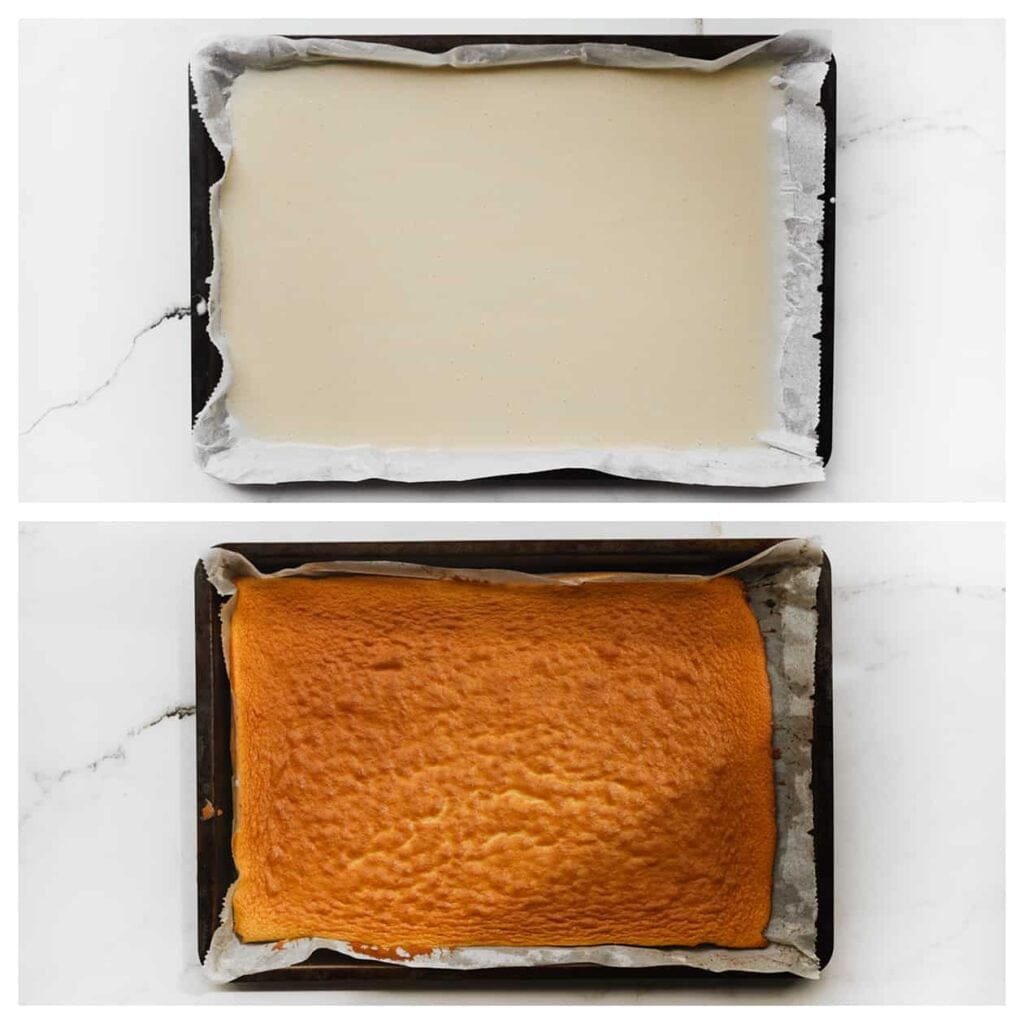
Line a half sheet pan with parchment paper and grease the paper well. Pour in the batter and spread it into a smooth, even layer. Bake for 8–10 minutes, until the cake is set.

Lay a damp kitchen towel over a wire rack. Flip the pan over onto the towel and carefully peel off the parchment.
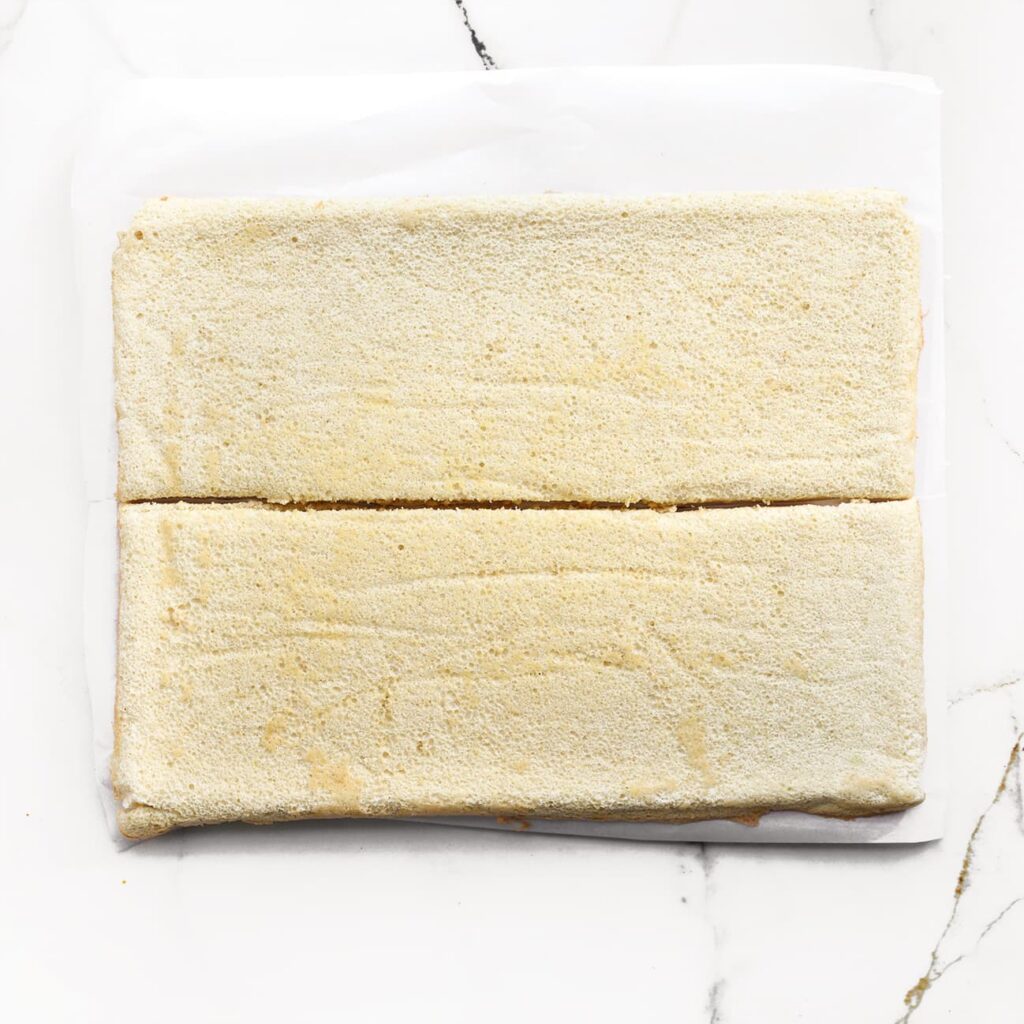
Cut the cake in half lengthwise to make two long strips.
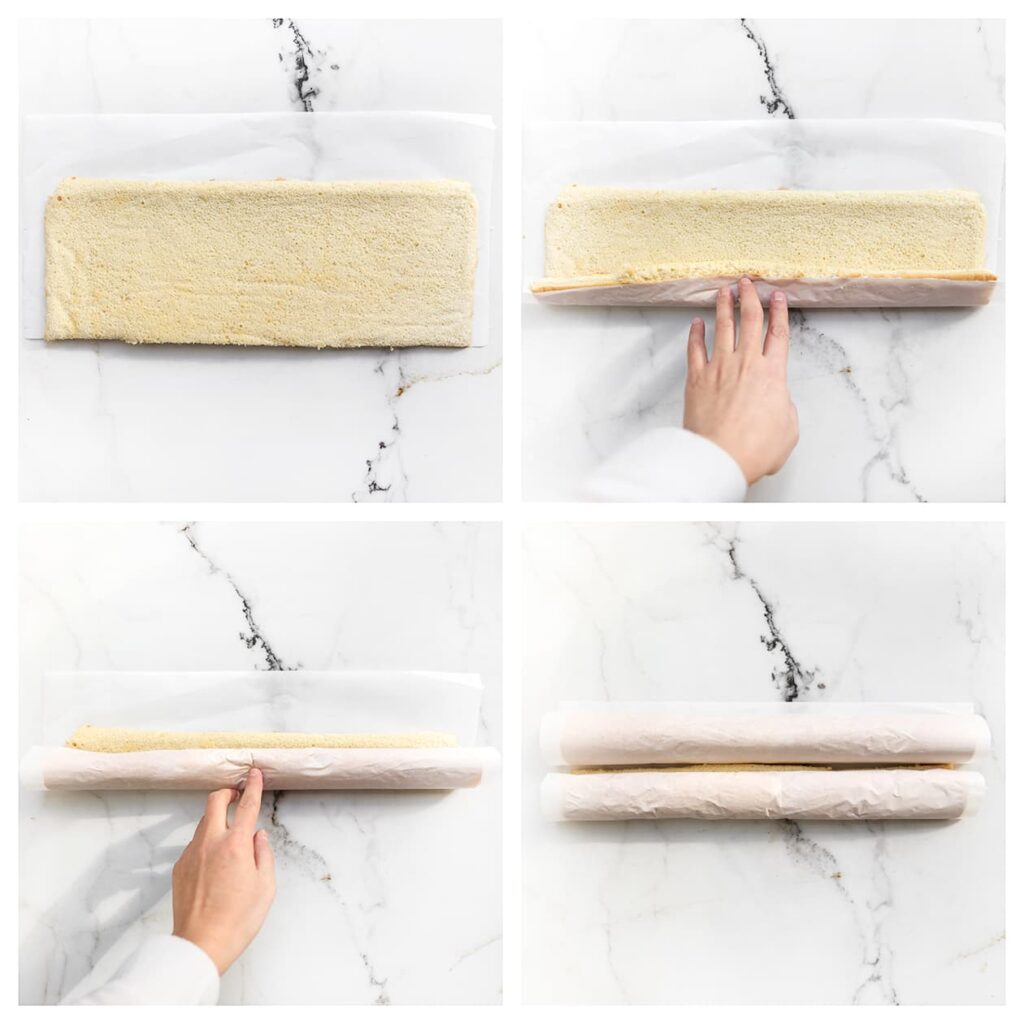
While the cake is still warm, roll up each strip using the damp towel or a sheet of parchment. Refrigerate for at least 30 minutes.

In a deep bowl, mix the mascarpone, powdered sugar, vanilla sugar and stabilizer for 1 minute. Add the heavy cream a little at a time, mixing as you go, until stiff. Set aside about one third of the cream for decorating. Cover it and keep it in the fridge.
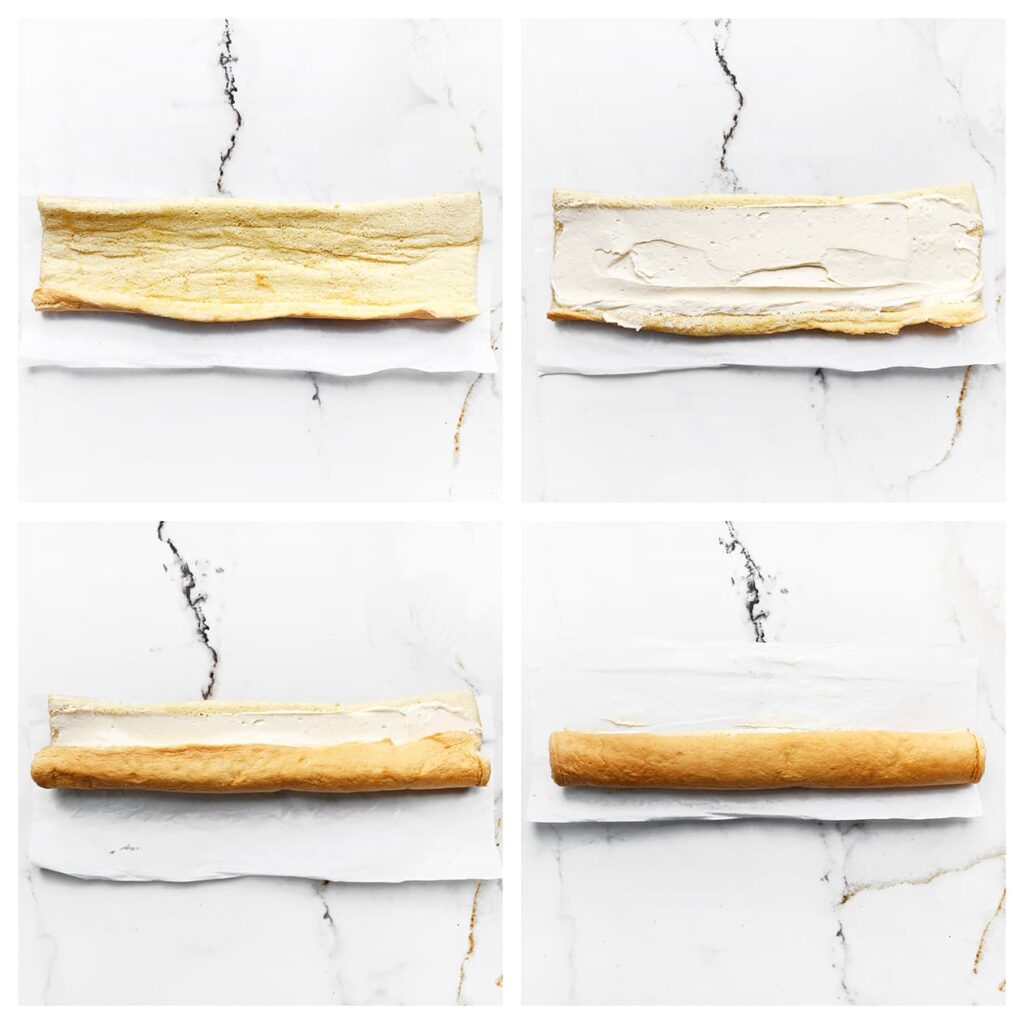
Take the cakes out of the fridge and gently unroll them. Spread the remaining cream evenly over both strips, then roll each one up tightly.
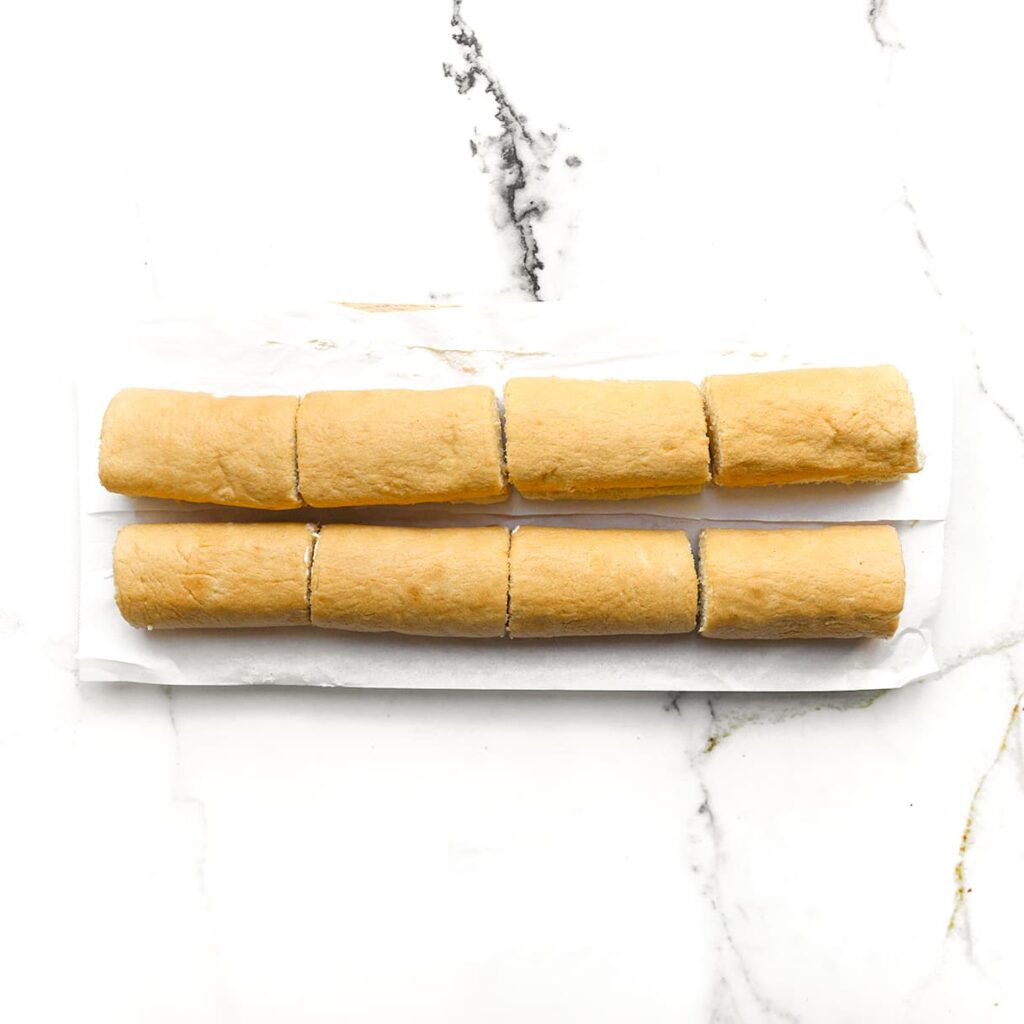
Cut the rolls into individual mini roll cakes.

Melt the Biscoff. Warm the cookie butter in the microwave, or over low heat, until it’s runny.

Dip the sides of each mini roll in the melted Biscoff, then spread a thin layer over the rest of the roll.
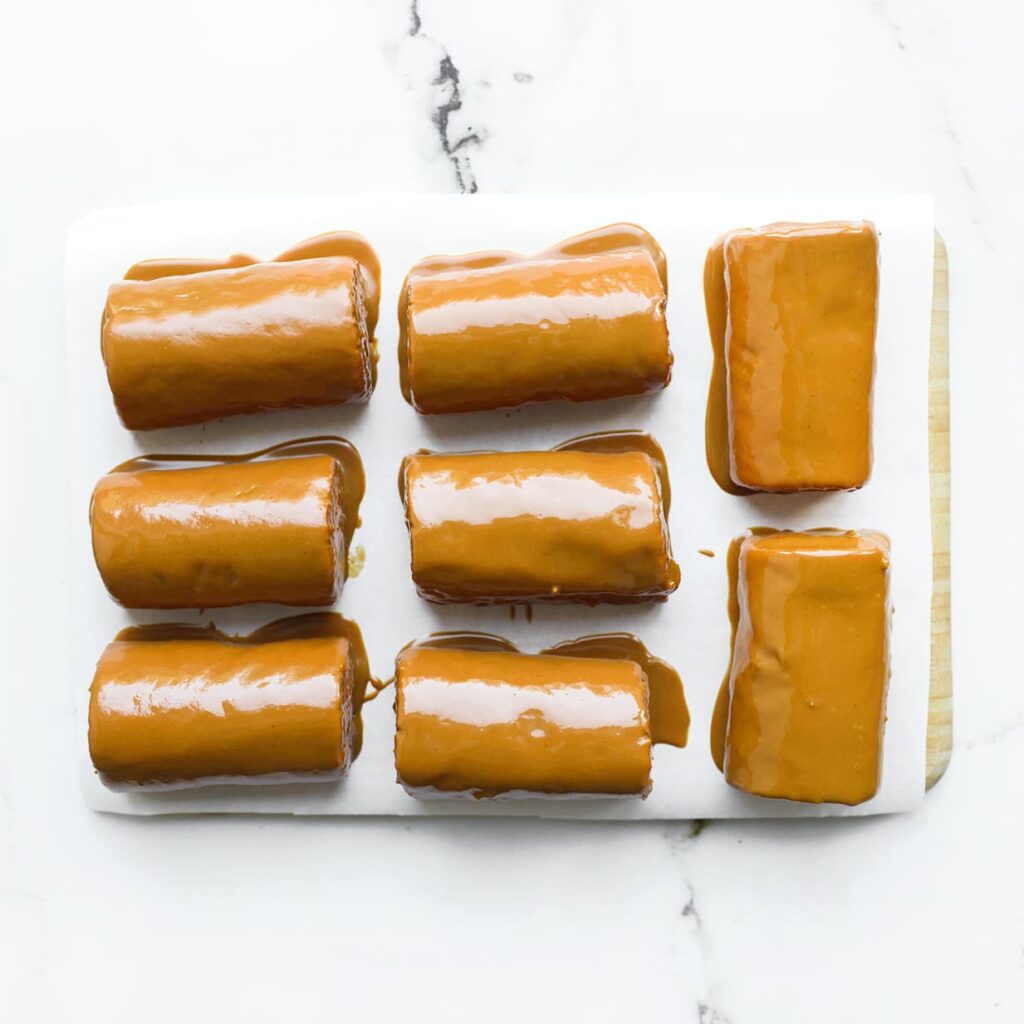
Leave the Biscoff coating to firm up, about 15–20 minutes. You can speed this up in the fridge.
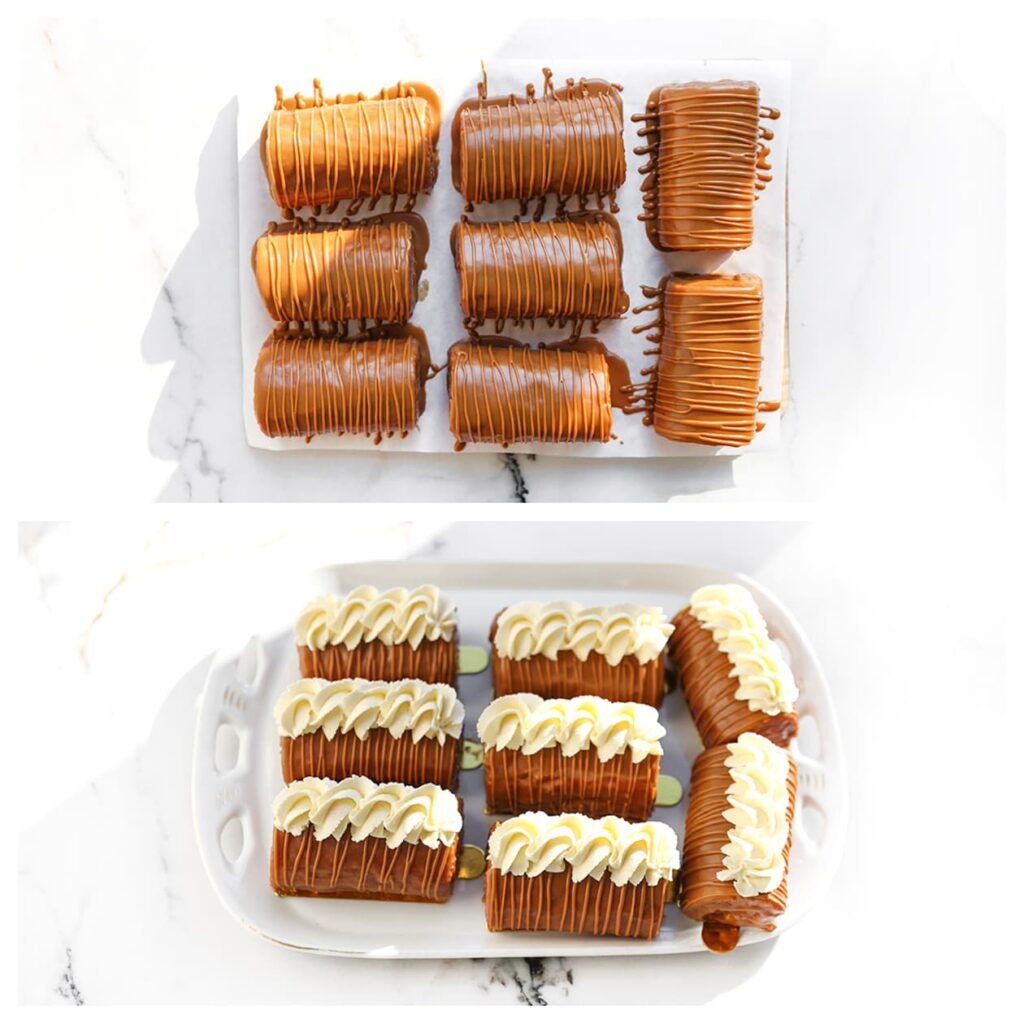
Drizzle extra melted Biscoff over the rolls. Pipe a swirl of the reserved cream on top of each one and finish with strawberries.

Related recipes



Mini Biscoff Swiss Rolls
Ingredients
| Instructions
|
0 Comments