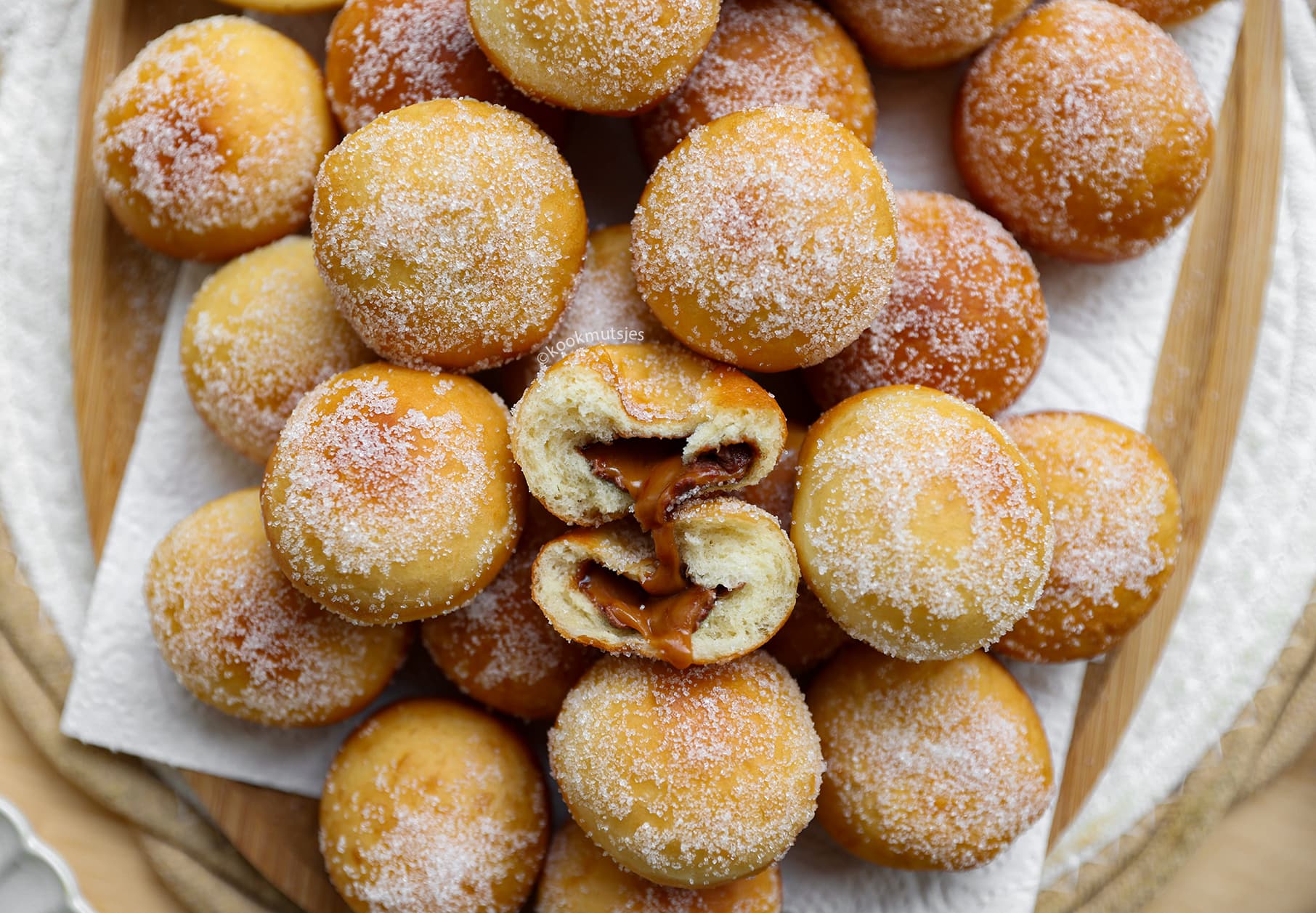
Caramel-Filled Donut Holes

Najat
Photo by Najat
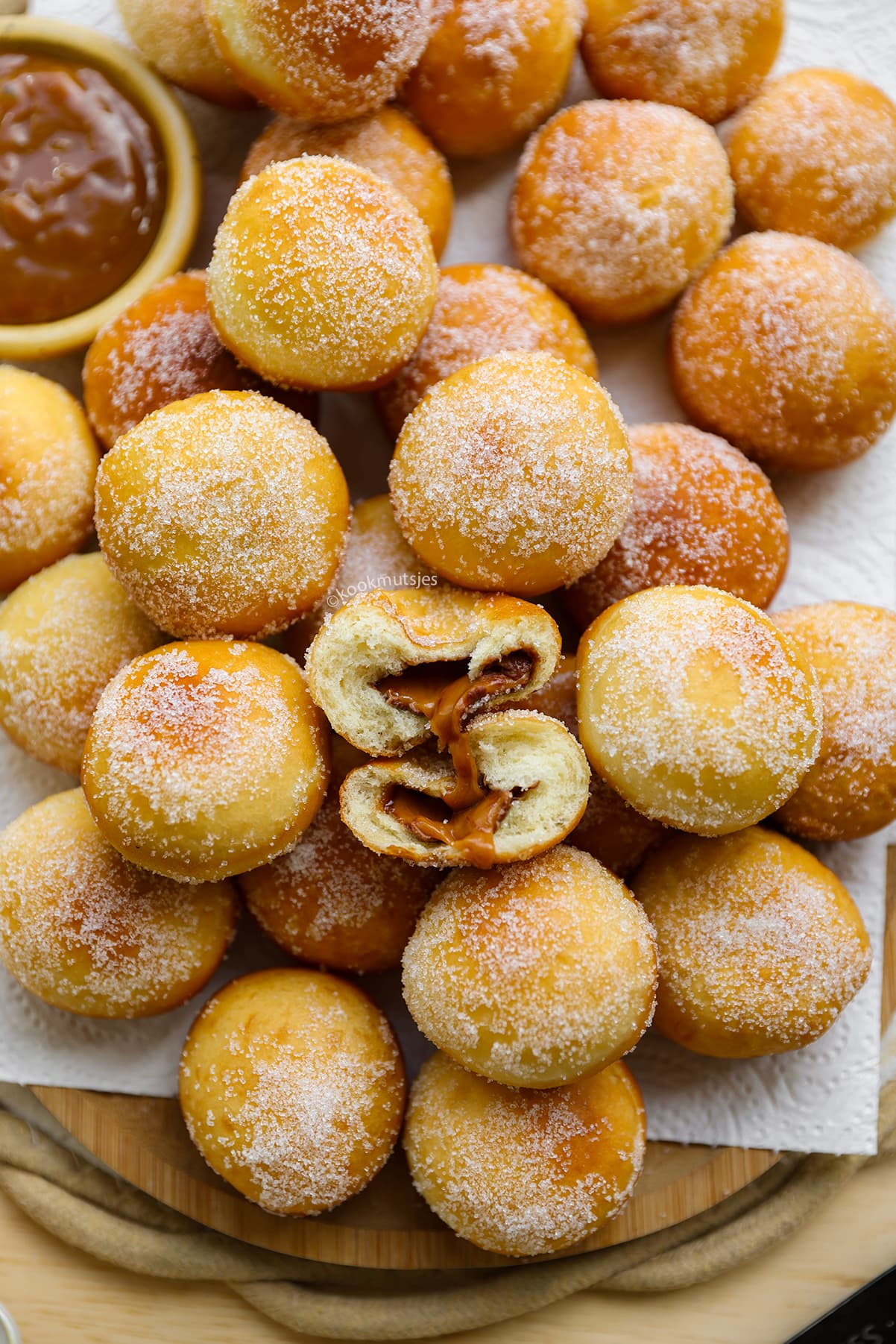
Fried donuts have long been a New Year’s Eve tradition in the Netherlands, usually made as larger, free-form balls of dough studded with raisins or currants. This recipe takes that same idea and shrinks it down into something a little more playful: bite-sized donut holes, each one stuffed with a gooey caramel center and rolled in sugar while still warm.
The perfect New Year’s treat
Thes hole donuts make a fantastic New Year’s Eve dessert or addition to your New Year’s treats spread, and despite how impressive they look, this donut holes recipe comes together with surprisingly little effort.
The Process: What to Keep in Mind
This recipe comes together in a few key stages, and a couple of small details make the difference between donuts that turn out perfectly and ones that don’t. After the dough’s first rise, you’ll portion it into 30 pieces and fill each one with a caramel candy. The most important step here is pinching the seams firmly closed so the caramel can’t leak out during frying, any gaps in the dough will let the caramel escape into the hot oil, which can burn and smoke, so take an extra few seconds with each one to make sure the seam is fully sealed.
Once the donuts are filled, don’t skip the second rise. Letting the shaped, filled dough balls rest for 30 minutes before frying gives the yeast time to work again, which results in a lighter, airier texture. Skipping or rushing this step will leave you with denser, less fluffy donuts, so it’s worth the wait.
Key Ingredients
Milk: lukewarm milk activates the yeast and helps create a soft, tender dough. Make sure it’s warm, not hot, since overly hot liquid can kill the yeast.
Instant yeast: what gives the dough its rise and light, airy texture, both before and after filling.
Vanilla sugar: a common Dutch pantry staple that adds a subtle vanilla flavor to the dough. If you can’t find it, replace it with a teaspoon vanilla extract.
Caramel squares: the star of the filling and the twist that sets these apart. In the UK they’re more known as caramel fudge.
Sunflower oil: Used for frying. Vegetable oil works fine as a substitute, but sunflower oil is preferred here for its neutral flavor, it won’t compete with the caramel or vanilla notes in the dough.
Ingredients
dough
FILLING
coating
extra
Tips
Use firm caramel for the filling, since soft or runny caramel is more likely to leak out during frying. Caramel candy cubes work very well for this.
Don’t fry too many donut balls at once. An overcrowded pan drops the oil temperature, which keeps the donut balls from browning nicely and can cause them to absorb more oil.
Roll the donut balls through the sugar while they’re still warm. The heat helps the granulated sugar stick better to the outside.
Instructions

Prepare all the ingredients.
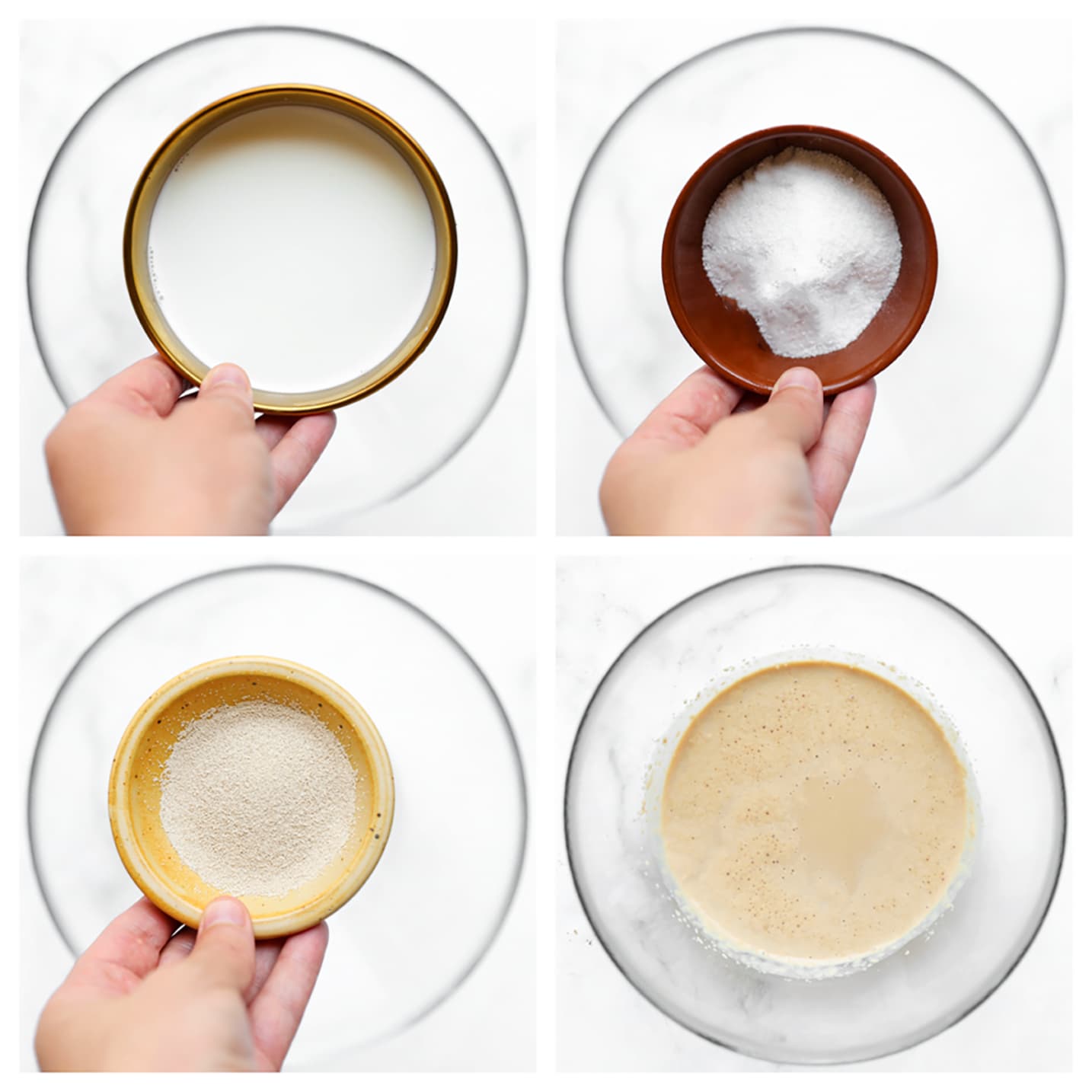
In a large bowl, combine the lukewarm milk, vanilla sugar, granulated sugar, and instant yeast. Stir well and let sit for 5 minutes.
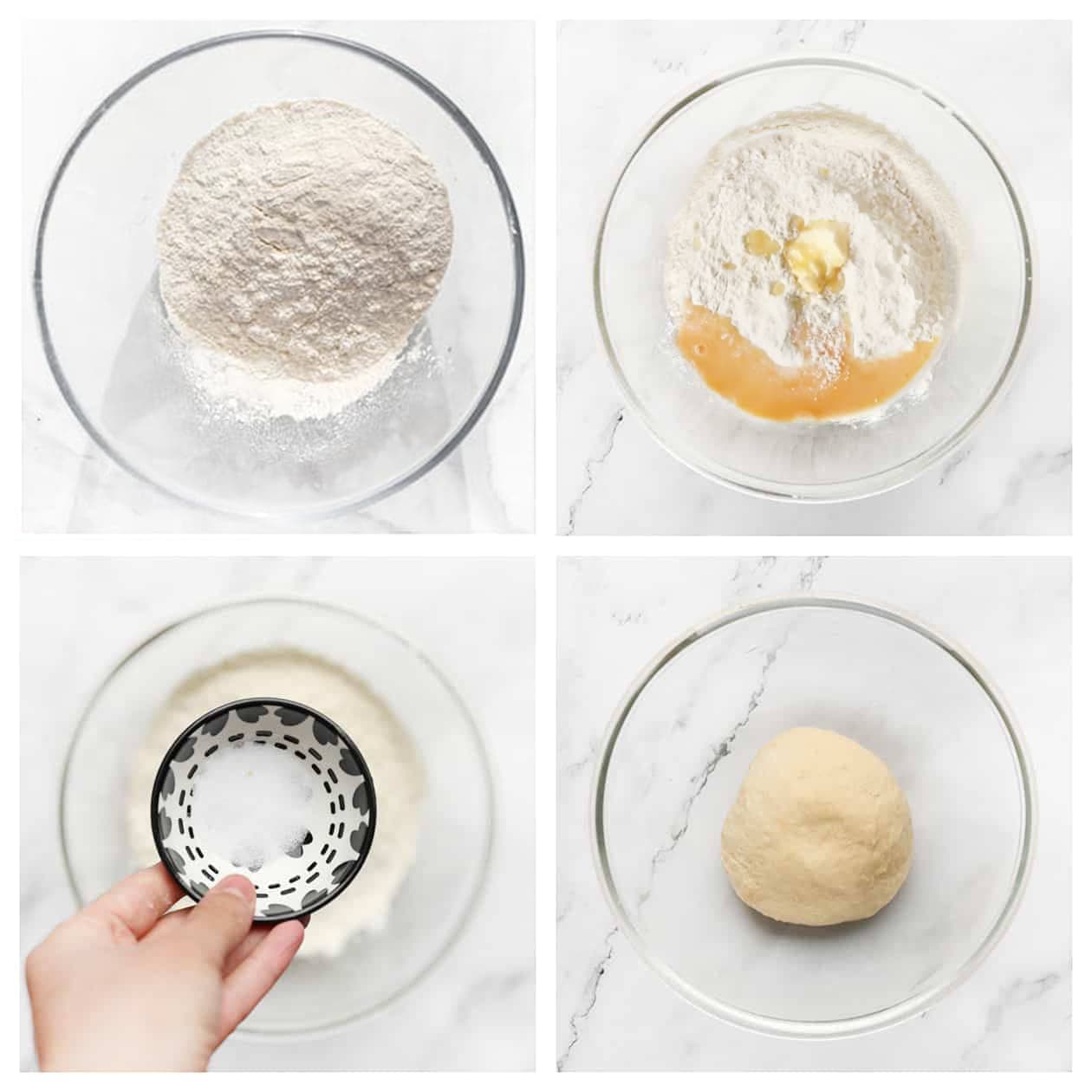
Cover the dough and let it rise in a warm spot for about 1 hour, or until doubled in size.
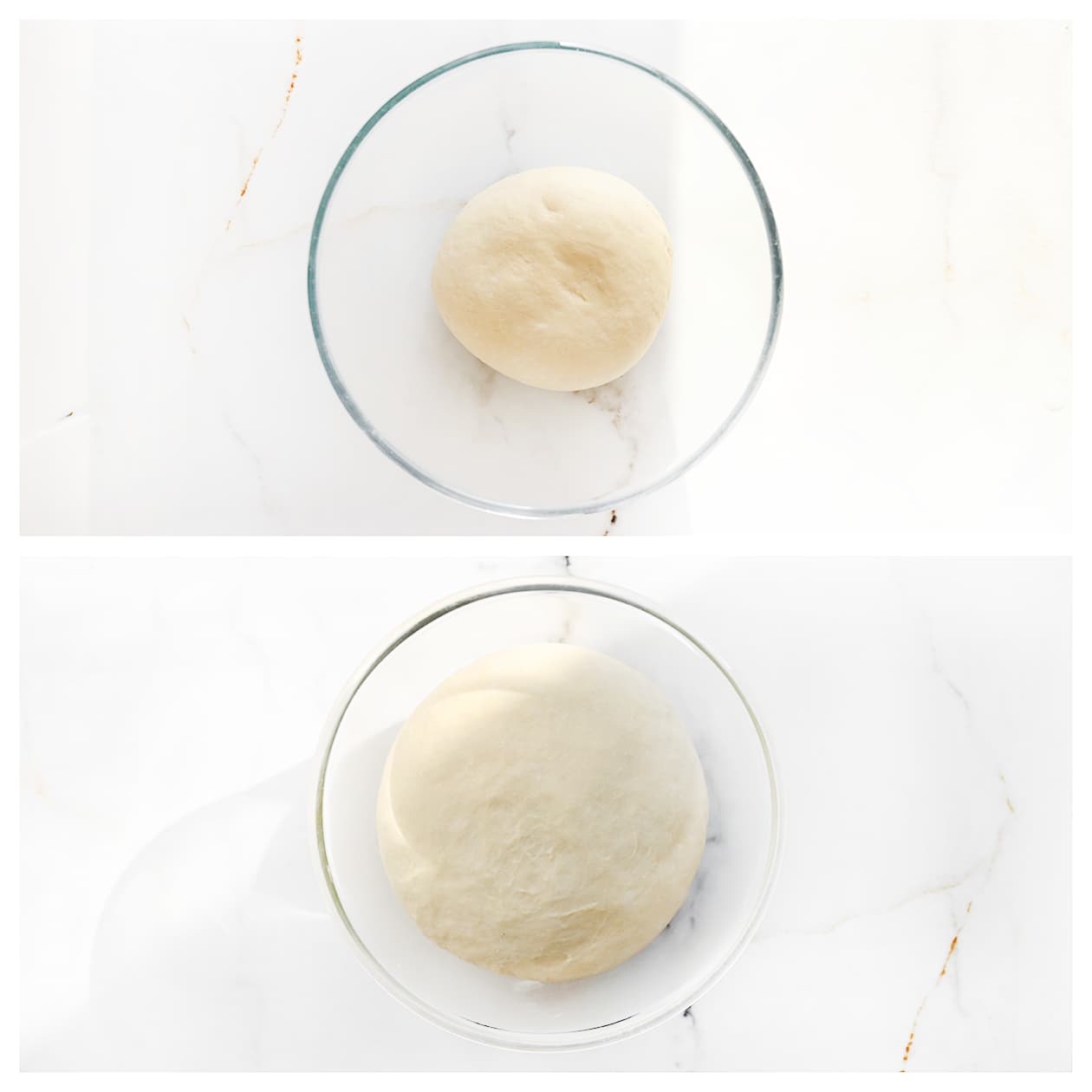
Cover the dough and let it rise in a warm spot for about 1 hour, or until doubled in size.
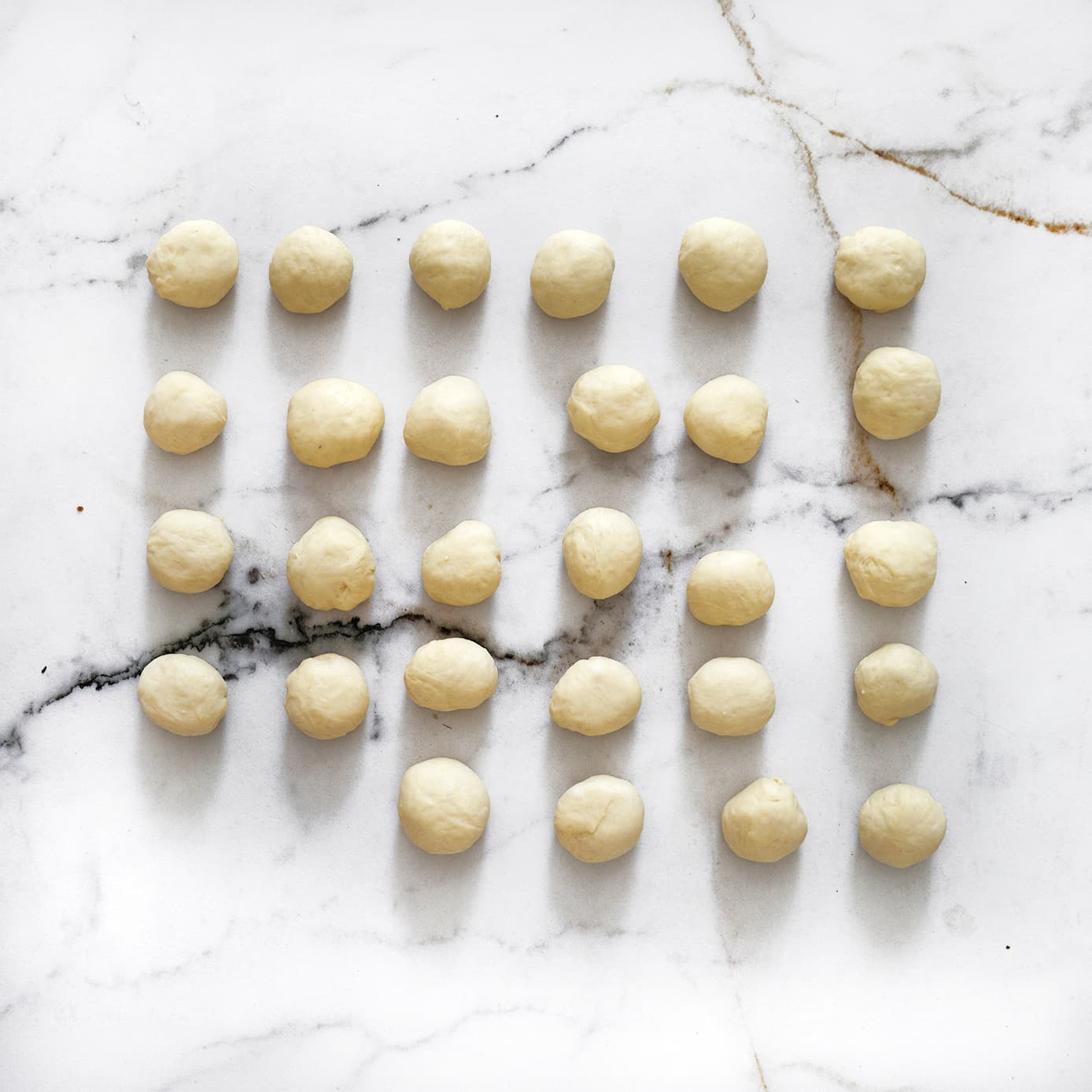
Deflate the risen dough to release the air, then divide it into 30 equal pieces. Roll each piece into a smooth ball.

Take one dough ball and flatten it slightly. Place a caramel candy in the center.
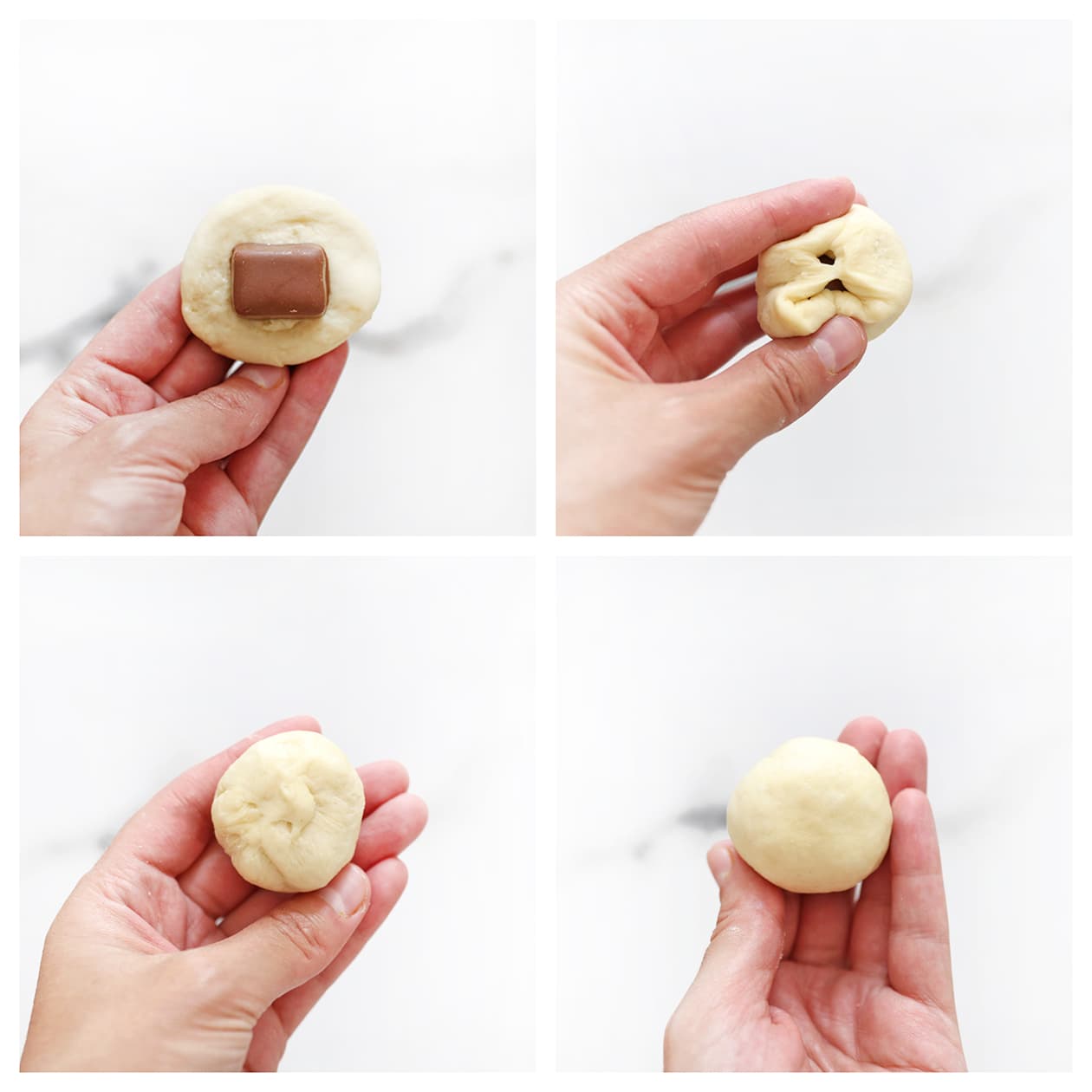
Fold the dough tightly around it.
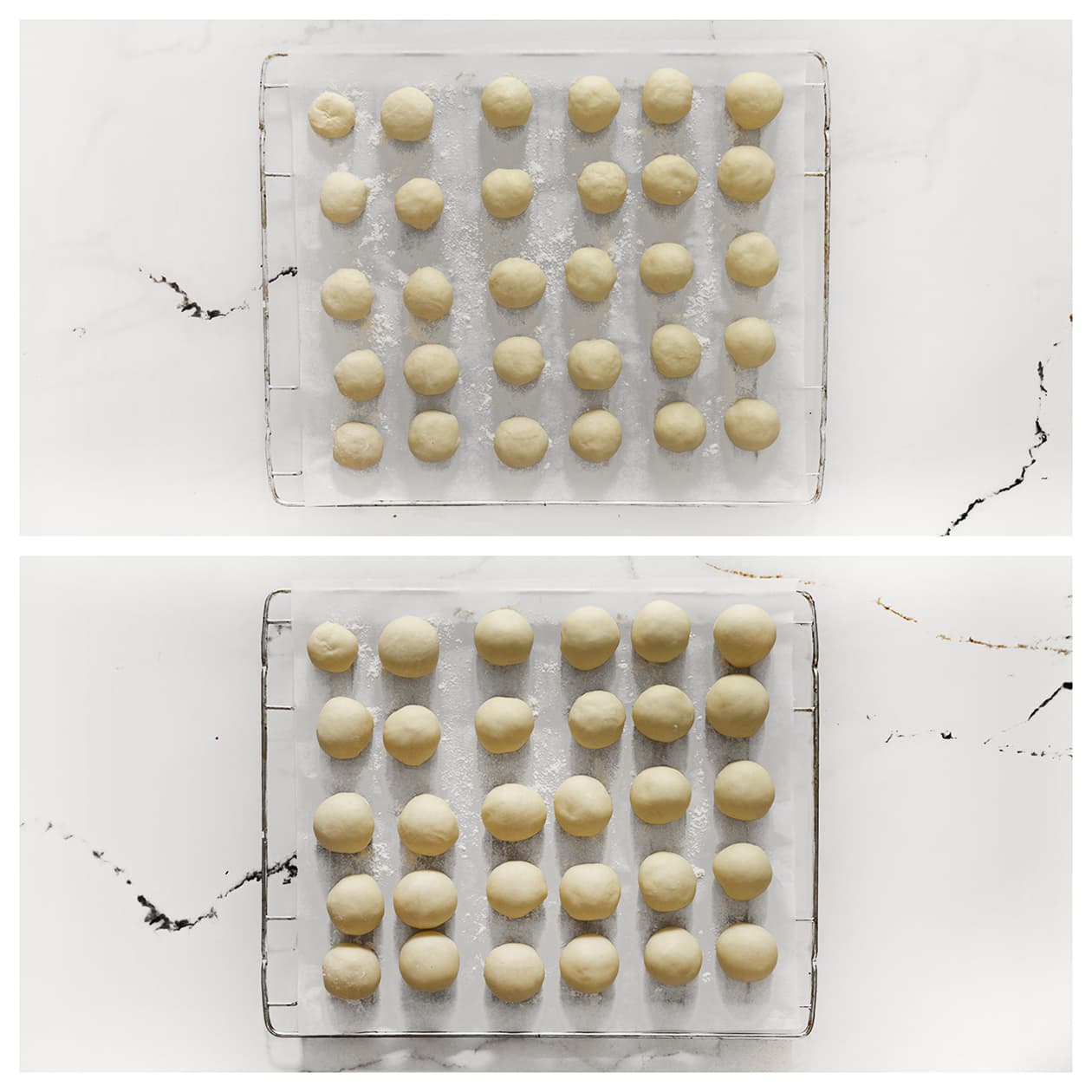
Arrange the filled dough balls on a parchment-lined baking sheet or rack. Let them rise for 30 minutes.
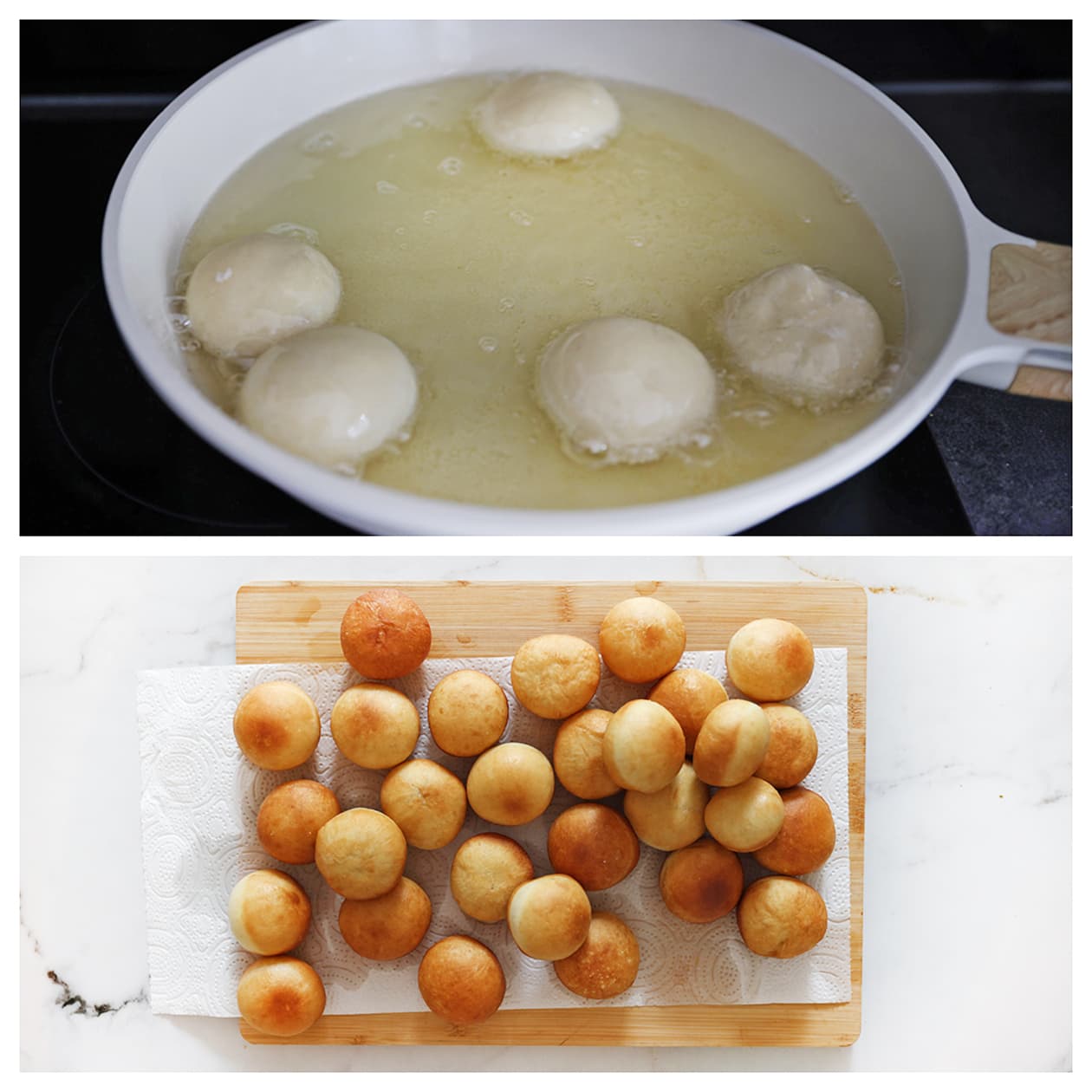
Heat a thin layer of sunflower oil in a large skillet over medium heat until it reaches about 350°F (175°C). Fry the donuts in batches, turning occasionally, until golden brown on all sides and cooked through. Drain on paper towels.

While the donuts are still warm, roll or toss them in granulated sugar until evenly coated.
Related recipes

Caramel-Filled Donut Holes
Ingredients
| Instructions
|
0 Comments
Heb jij dit recept gemaakt?
Laat anderen weten wat je ervan vond.