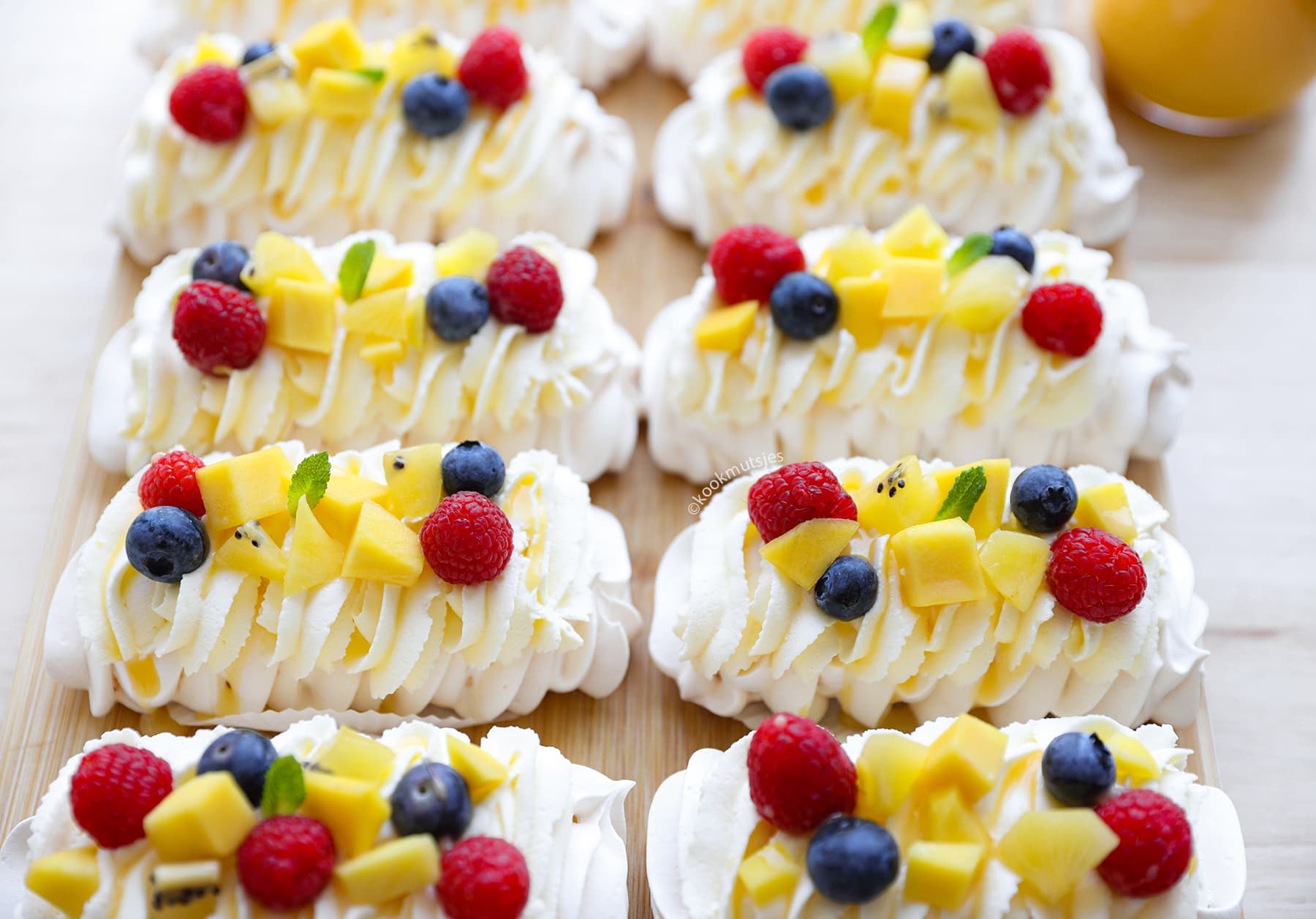
Pavlova with Mascarpone Cream

Najat
Photo by Najat
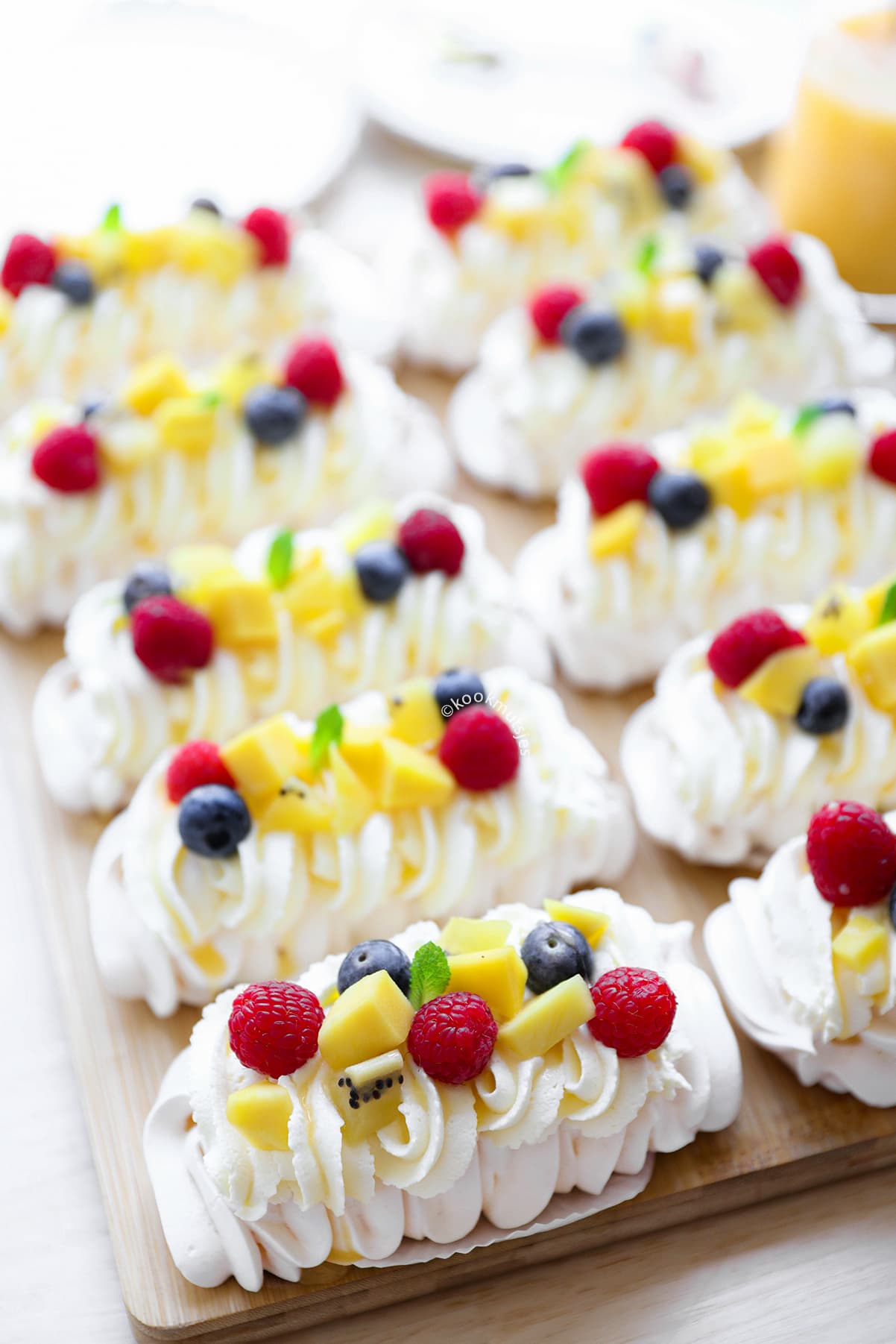
Pavlova is a festive dessert that is surprisingly easy to make. It consists of a light meringue with a crisp outside and a soft, almost marshmallow-like inside, finished with whipped cream and fresh fruit. You can choose to make one large pavlova for the whole table or smaller portions. In this recipe, I deliberately choose the latter, because it is easier to store and more convenient to serve.
What is Pavlova?
Pavlova is a meringue dessert made from stiffly beaten egg whites and sugar. It is baked slowly at a low temperature so the outside becomes dry and crisp, while the inside stays soft and marshmallow-like. It is then finished with whipped cream and fresh fruit. Where pavlova originally comes from is still debated. Both Australia and New Zealand claim the recipe. What is certain, however, is that the dessert was named after the Russian ballerina Anna Pavlova. The dessert is light and airy, which is why it is associated with a ballerina.
Pavlova Oven Setting
This is where things are most likely to go wrong.
Always use top and bottom heat (conventional oven), never fan-forced/convection. Convection can dry out the pavlova too quickly and cause cracks.
Keep the oven door closed during baking. A sudden temperature drop from cold air can cause the pavlova to collapse immediately.
Let the pavlova cool in the oven with the door closed or slightly open.
Storing Pavlova: How to Keep It Crisp
Pavlova should be stored in a dry environment, as moisture is the last thing you want. It ruins the crisp outer shell. Store it at room temperature in a dry place, in an airtight container or cake box. It will keep well for 1 to 2 days.
Garnishing: Decorate the pavlova just before serving. This keeps the crisp shell intact and the fruit fresh.
Storing decorated pavlova: A decorated pavlova is best stored for as short a time as possible. With whipped cream and fruit, it softens quickly, especially in the refrigerator.
Making pavlova ahead: Yes, you can. Bake the meringue one day in advance and store it in a dry place until ready to serve.
Ingredients
PAVLOVA MIXTURE
CREAM
GARNISH
Tips
Always ensure your bowl and whisk are completely grease-free, as even a small amount of fat can prevent your egg whites from stiffening properly. See the recipe for whipping egg whites stiff for more information.
Whip the egg whites until you can form firm peaks that stand upright; if they still collapse, just keep whipping a bit longer.
Do not open the oven during baking, as temperature fluctuations can cause your pavlova to collapse or crack.
Always let the pavlova cool slowly in the oven with the door closed, so it dries evenly and doesn’t suddenly crack.
For a nice round shape, you can draw a circle on the baking paper beforehand and pipe the pavlova within those lines.
Use a combination of sweet and tart fruit, such as strawberries and raspberries with kiwi or mango, for the perfect flavor balance.
Instructions
Preheat the oven to 120°C (top and bottom heat / conventional oven) and make sure you use a clean, grease-free bowl.
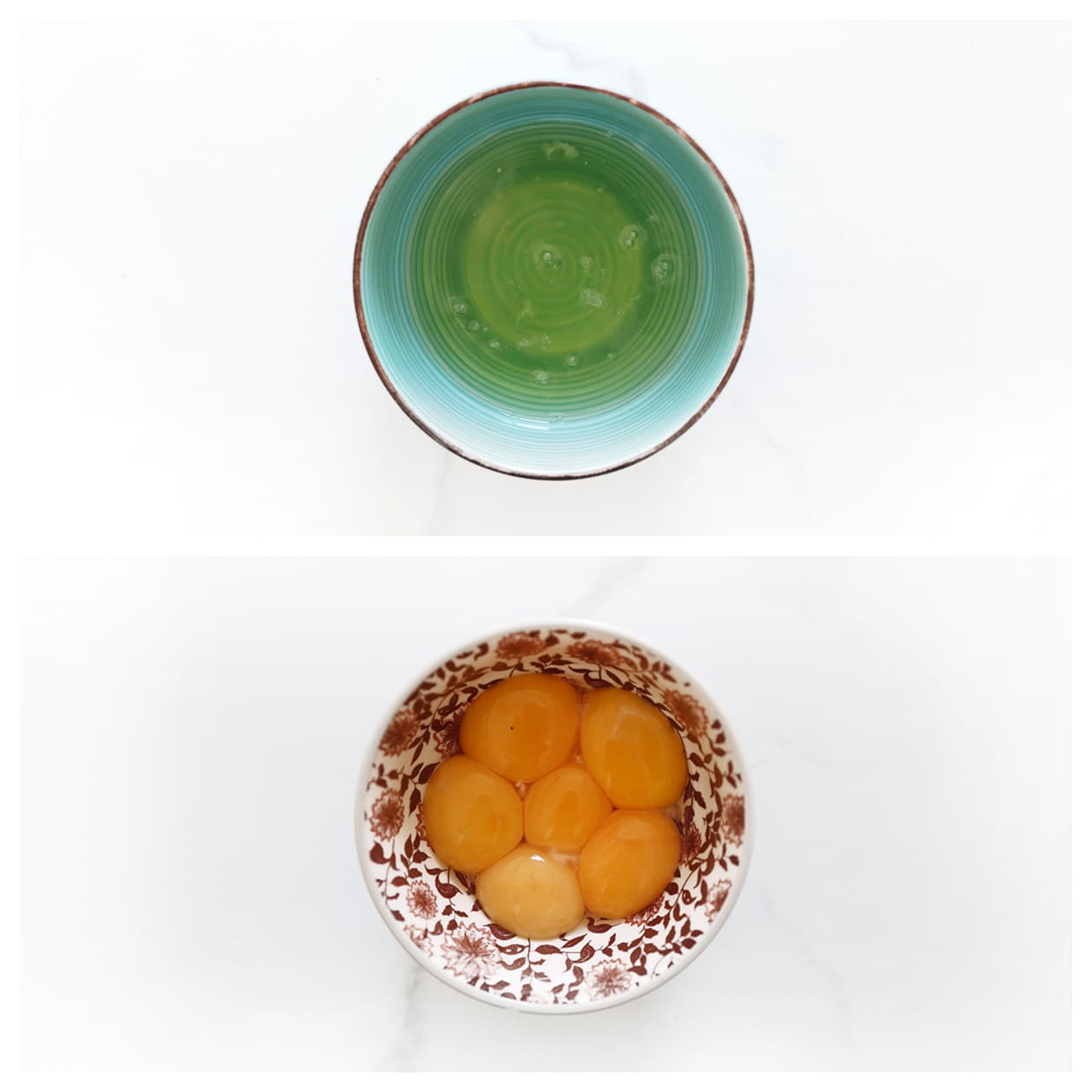
Separate the egg whites from the yolks. Make sure no egg yolk gets into the egg whites.
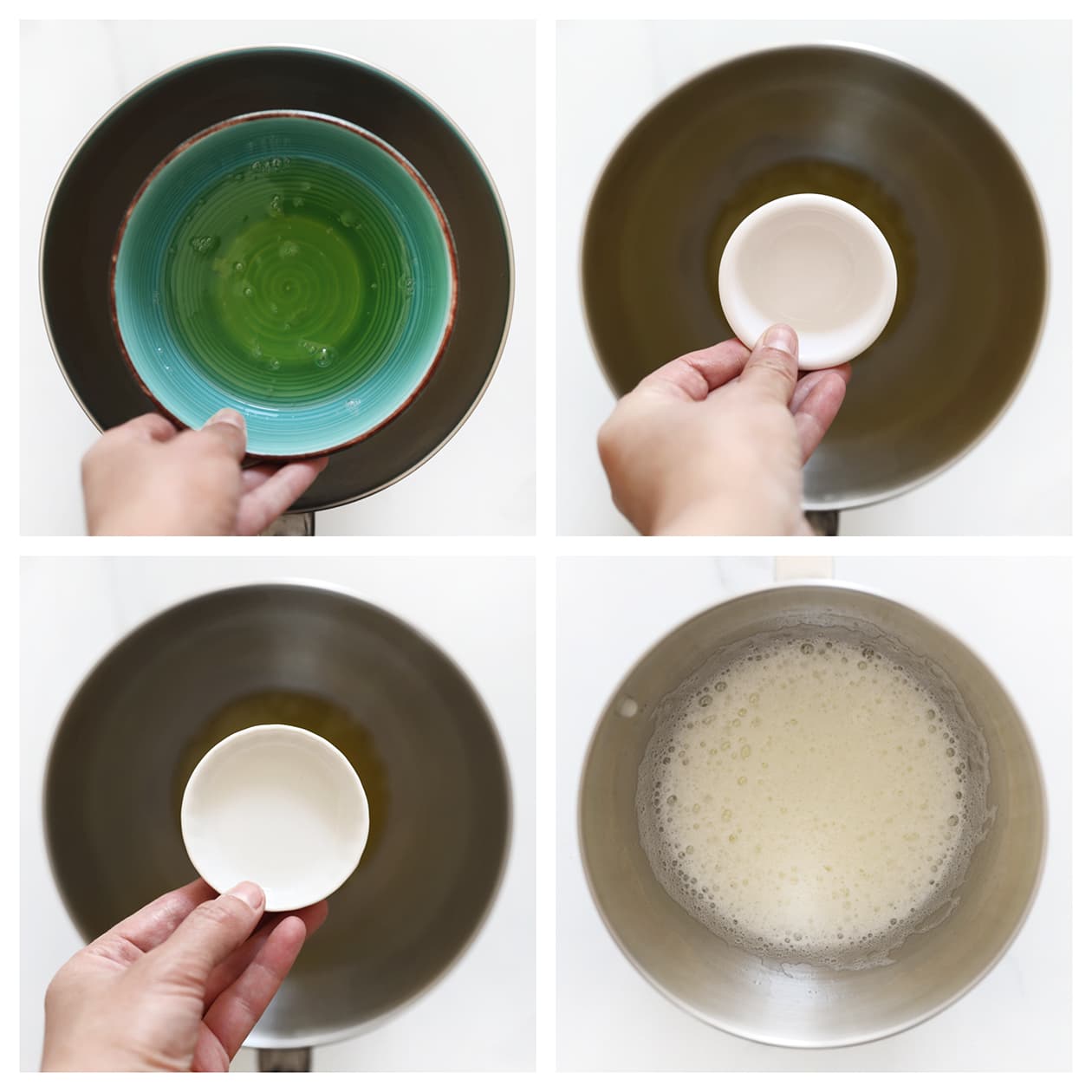
Place the egg whites in the bowl and add the vinegar and a pinch of salt. Beat on medium-high speed until foamy.
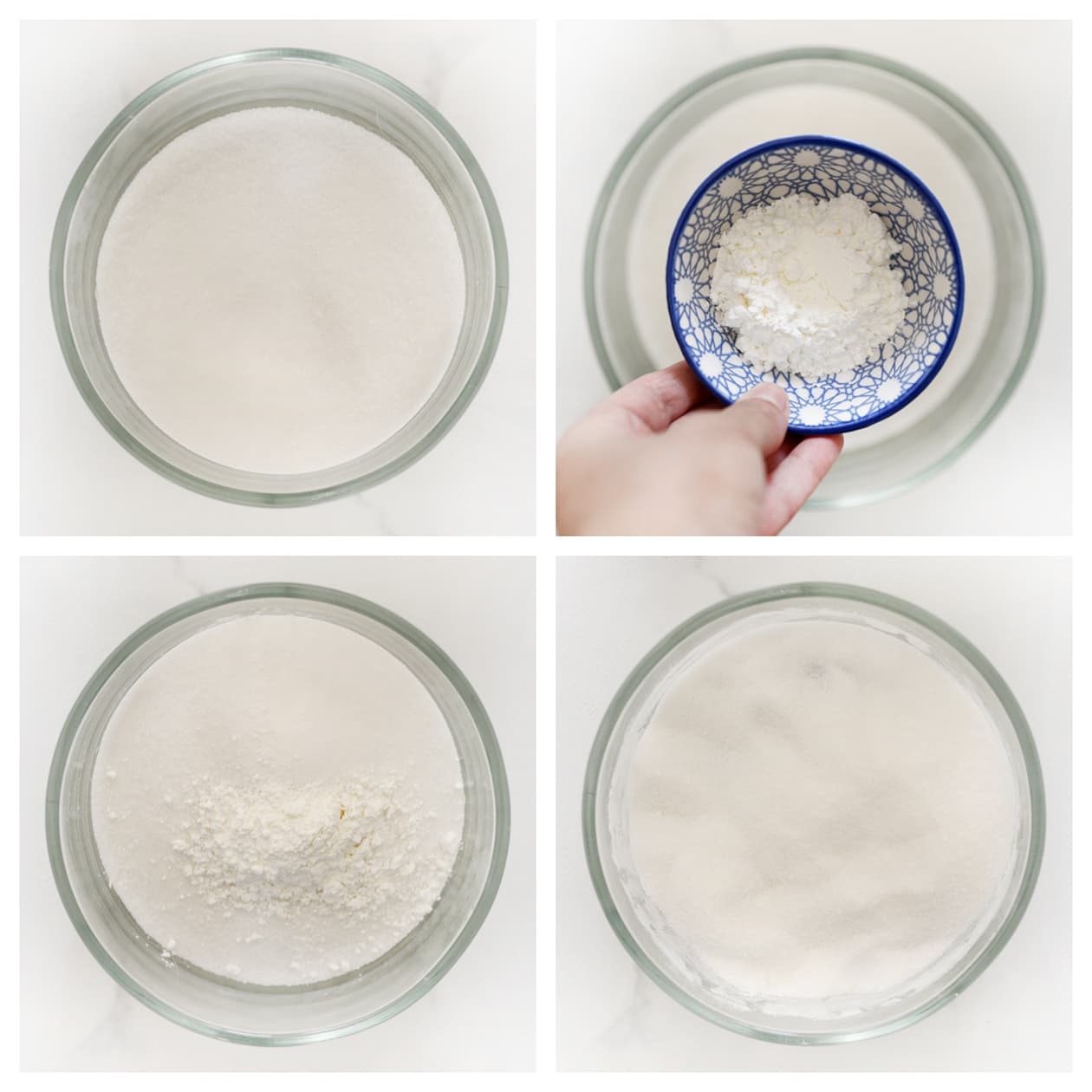
In a separate bowl, mix the granulated sugar, vanilla sugar, and cornstarch.
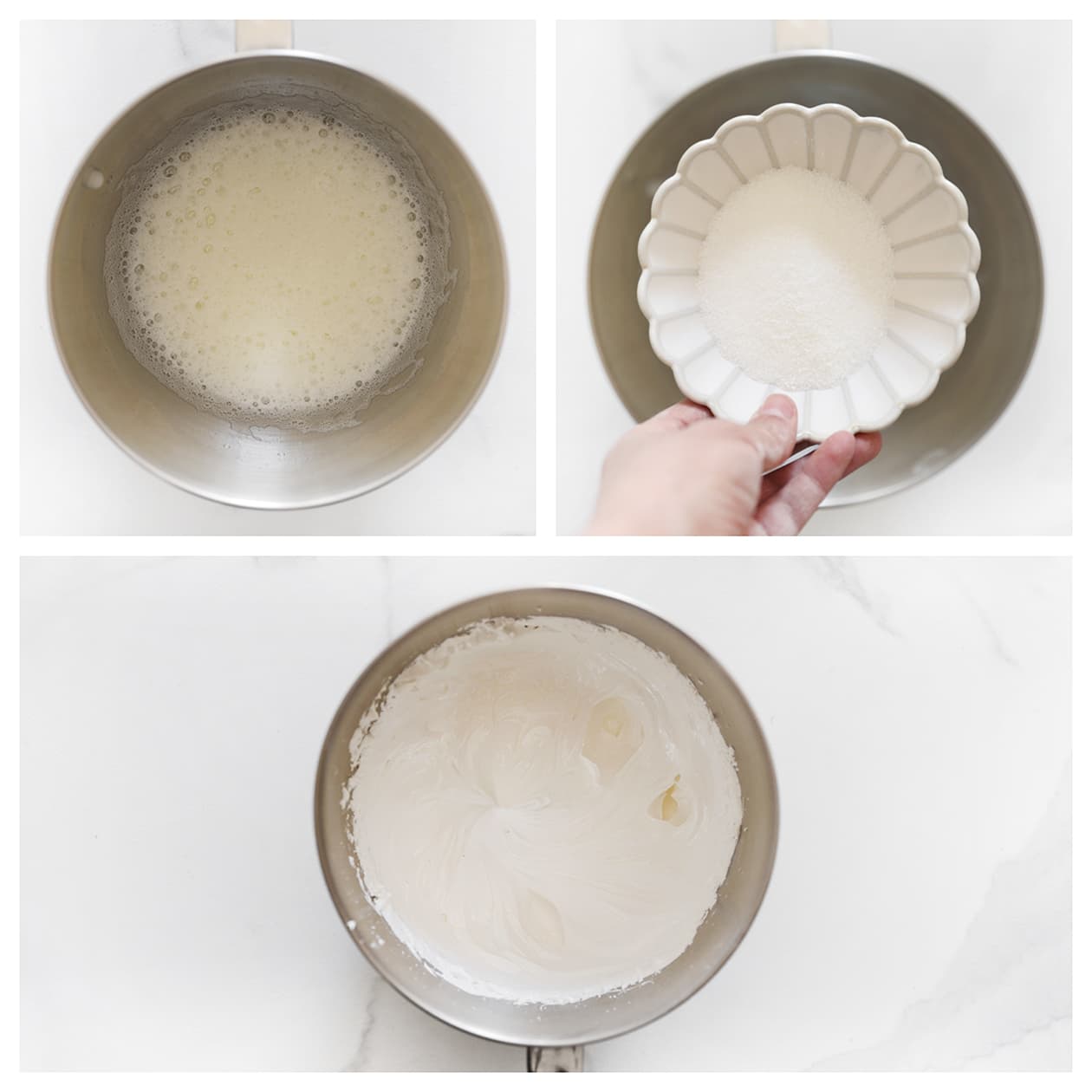
Gradually add the sugar mixture to the egg whites while continuing to beat. Whisk until the mixture becomes stiff, glossy, and thick (this takes about 8–10 minutes).
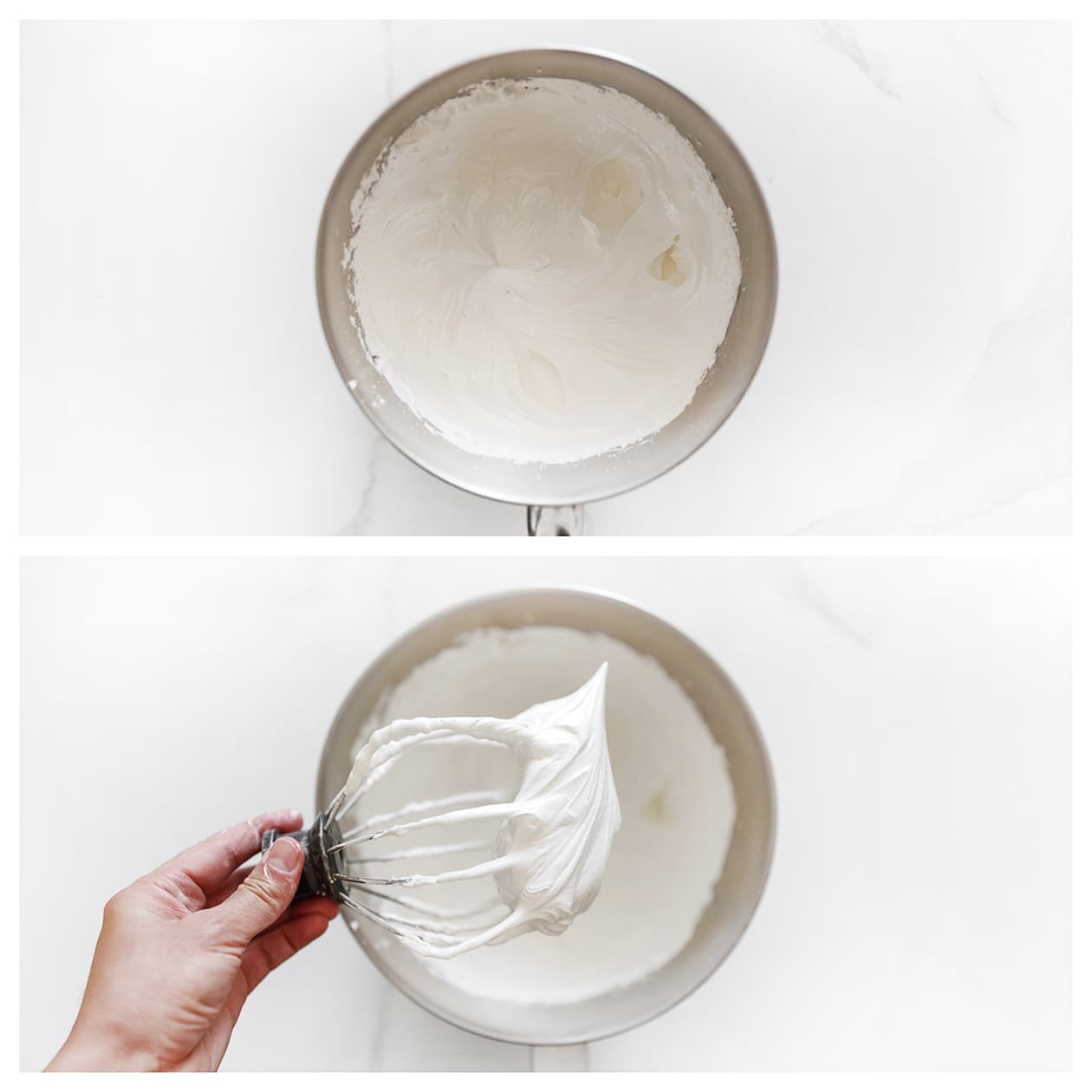
Check if the meringue is ready by lifting the beaters. Stiff peaks should stand upright.
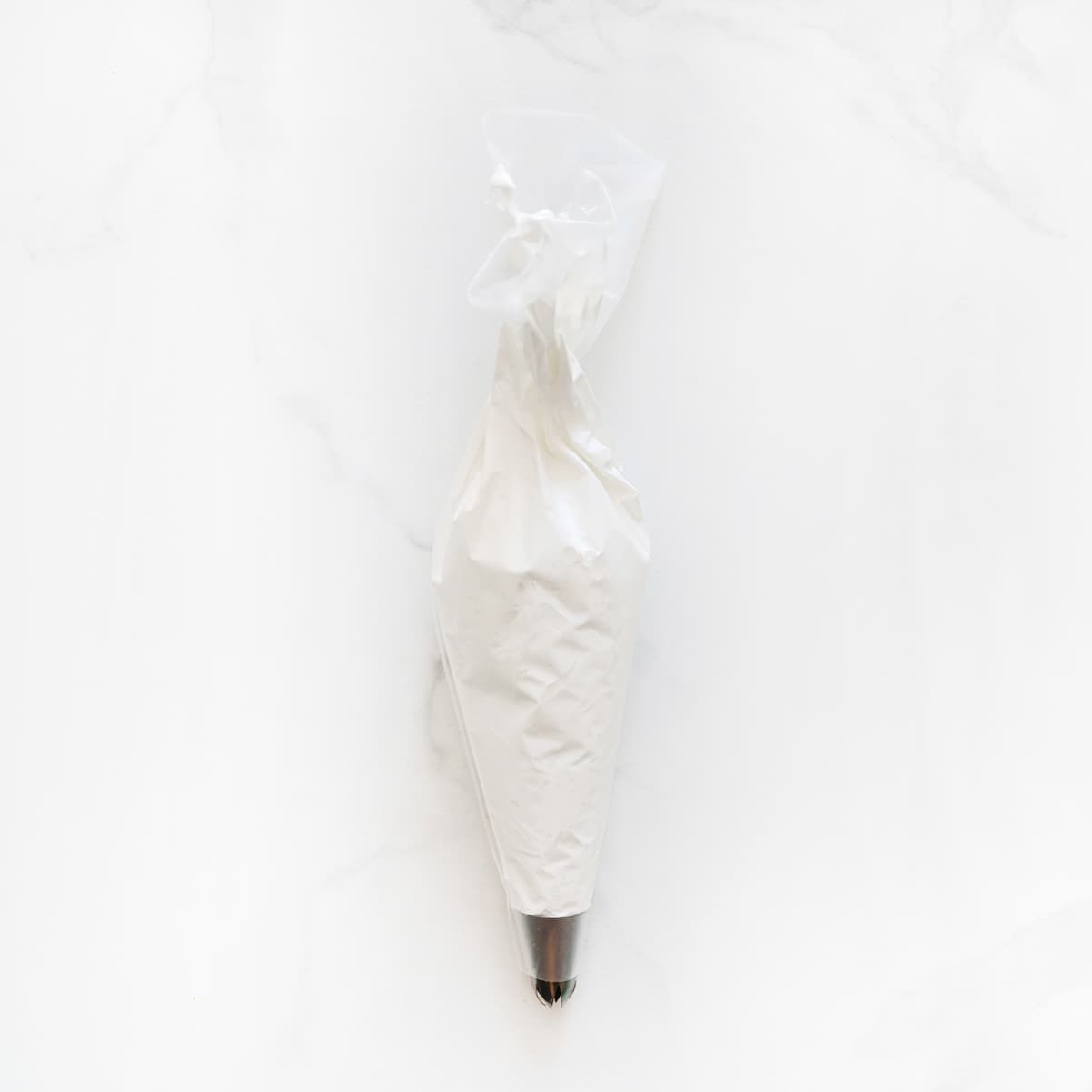
Transfer the meringue to a piping bag fitted with a nozzle.
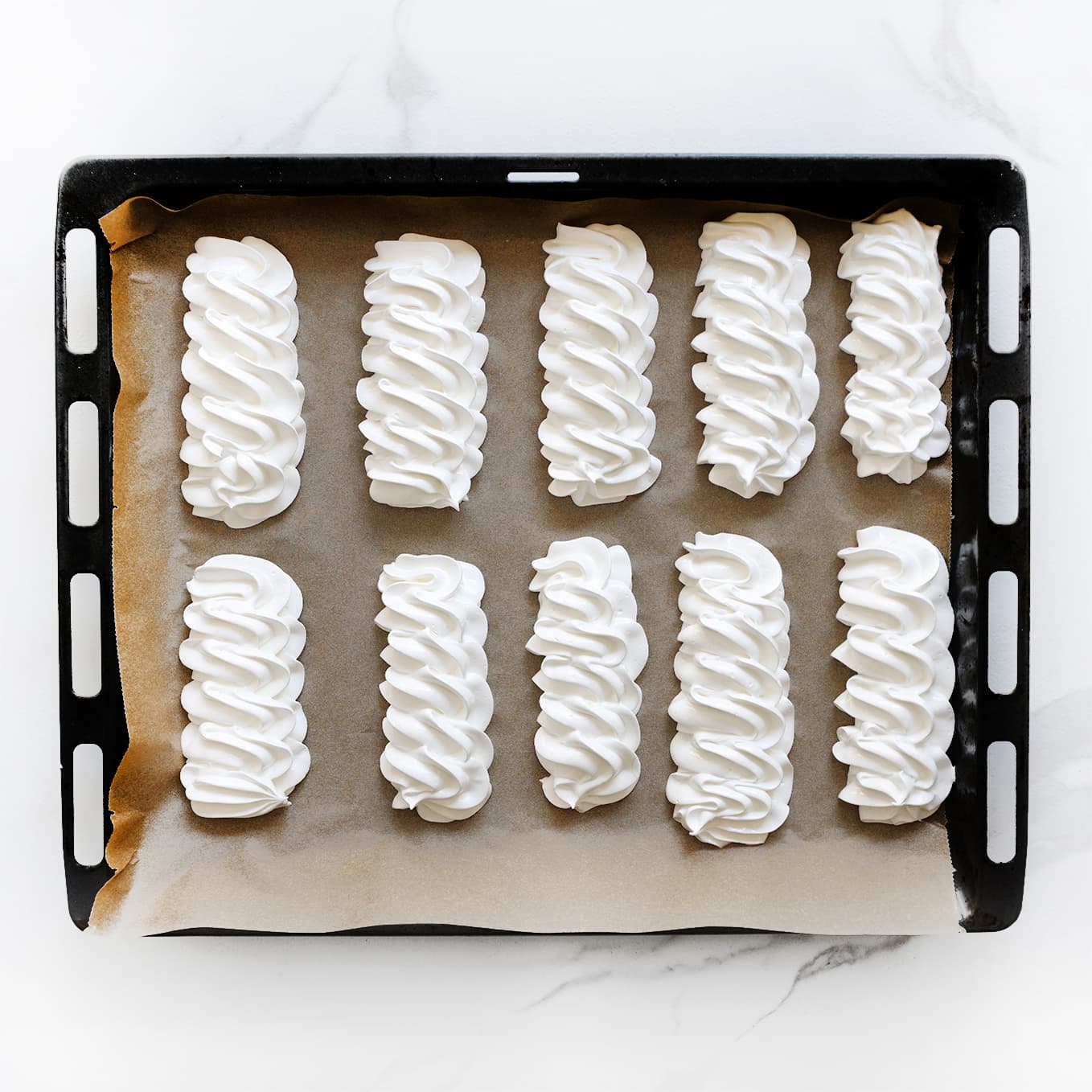
Pipe the pavlova onto a baking tray lined with parchment paper.
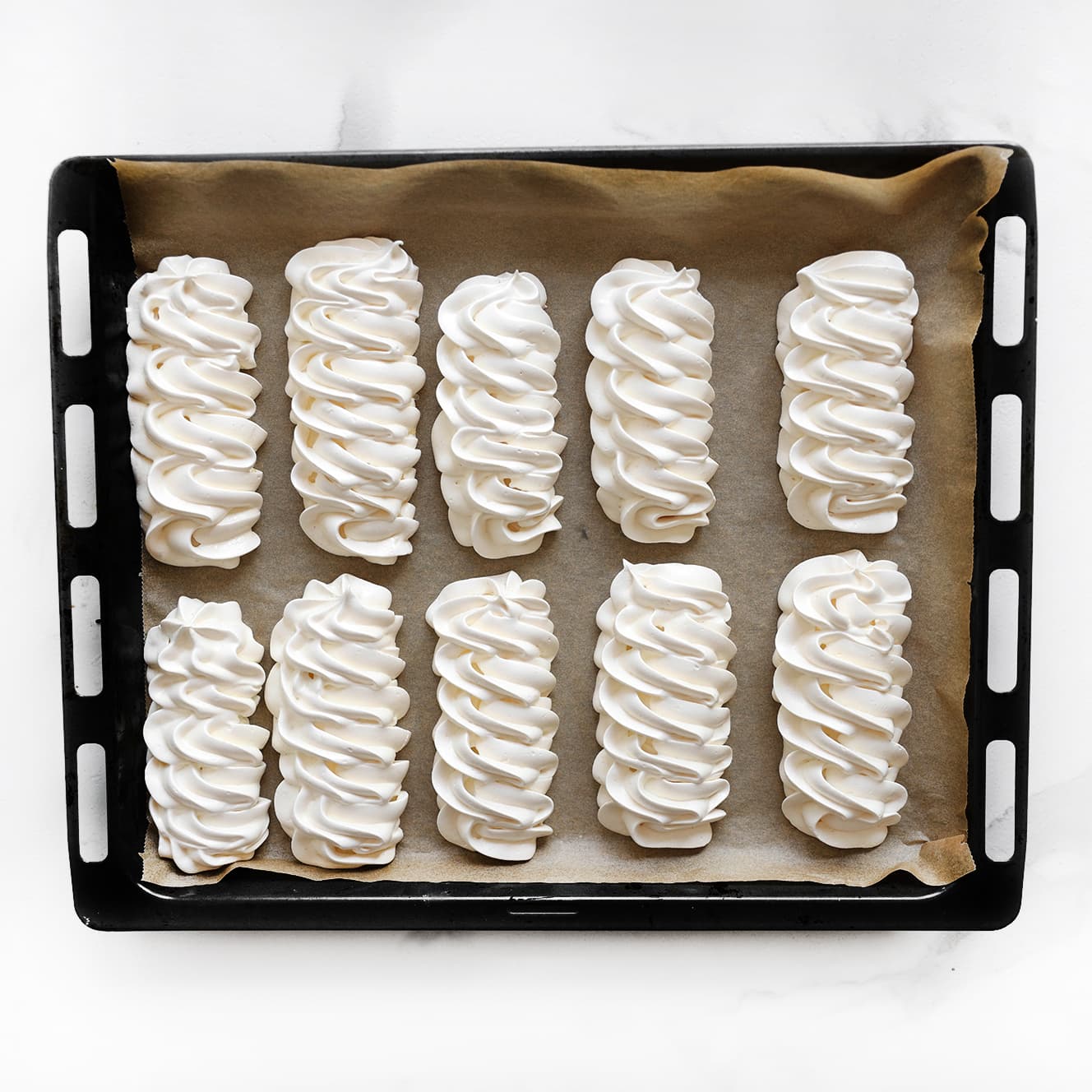
Bake the pavlova for about 90 minutes. Then turn off the oven and let the pavlova cool completely inside the oven with the door slightly open. This helps prevent cracks.
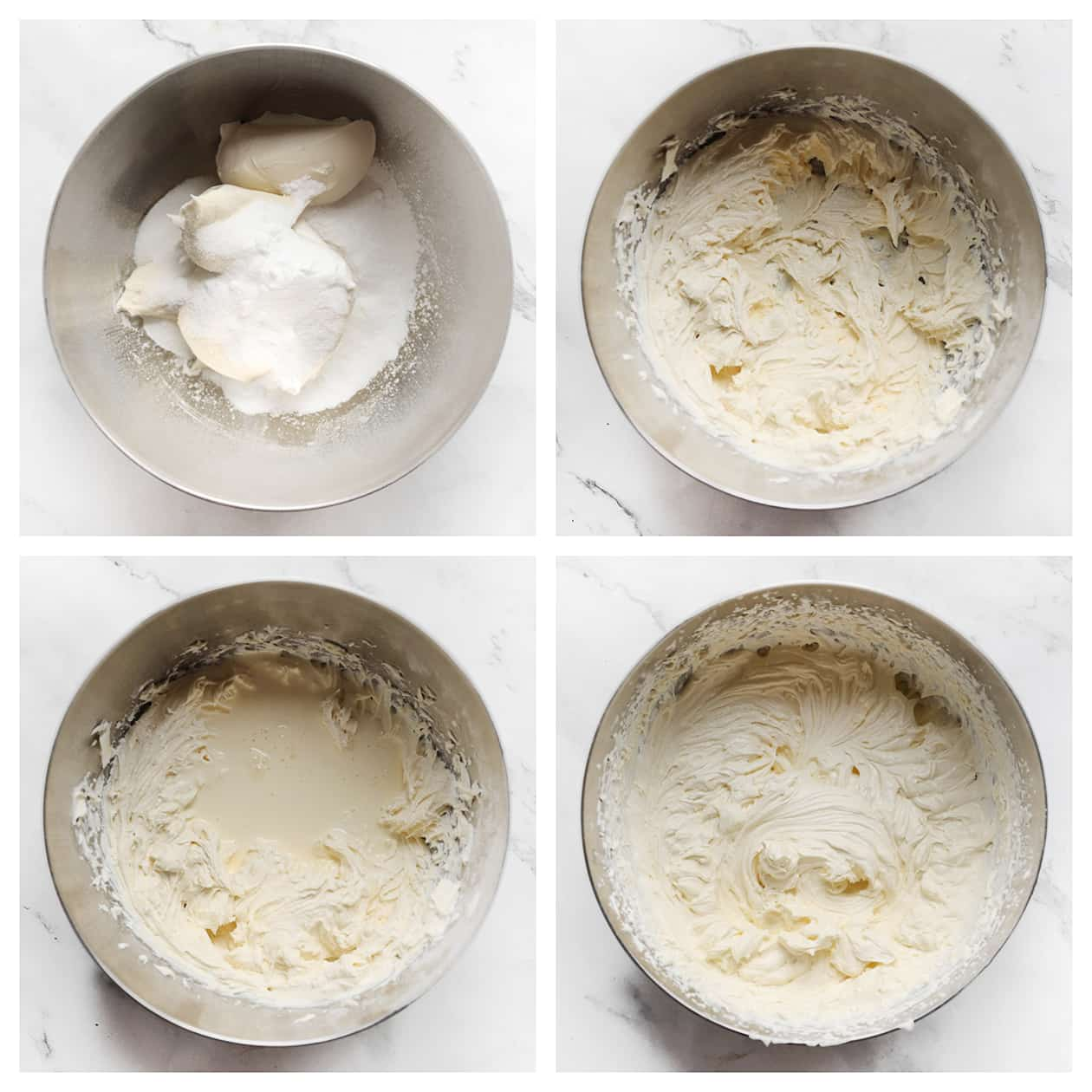
Meanwhile, make the mascarpone cream. Beat the mascarpone, powdered sugar, vanilla sugar, and whipped cream stabilizer for 1 minute in a deep bowl. Gradually add the heavy cream and continue beating until thick and creamy.
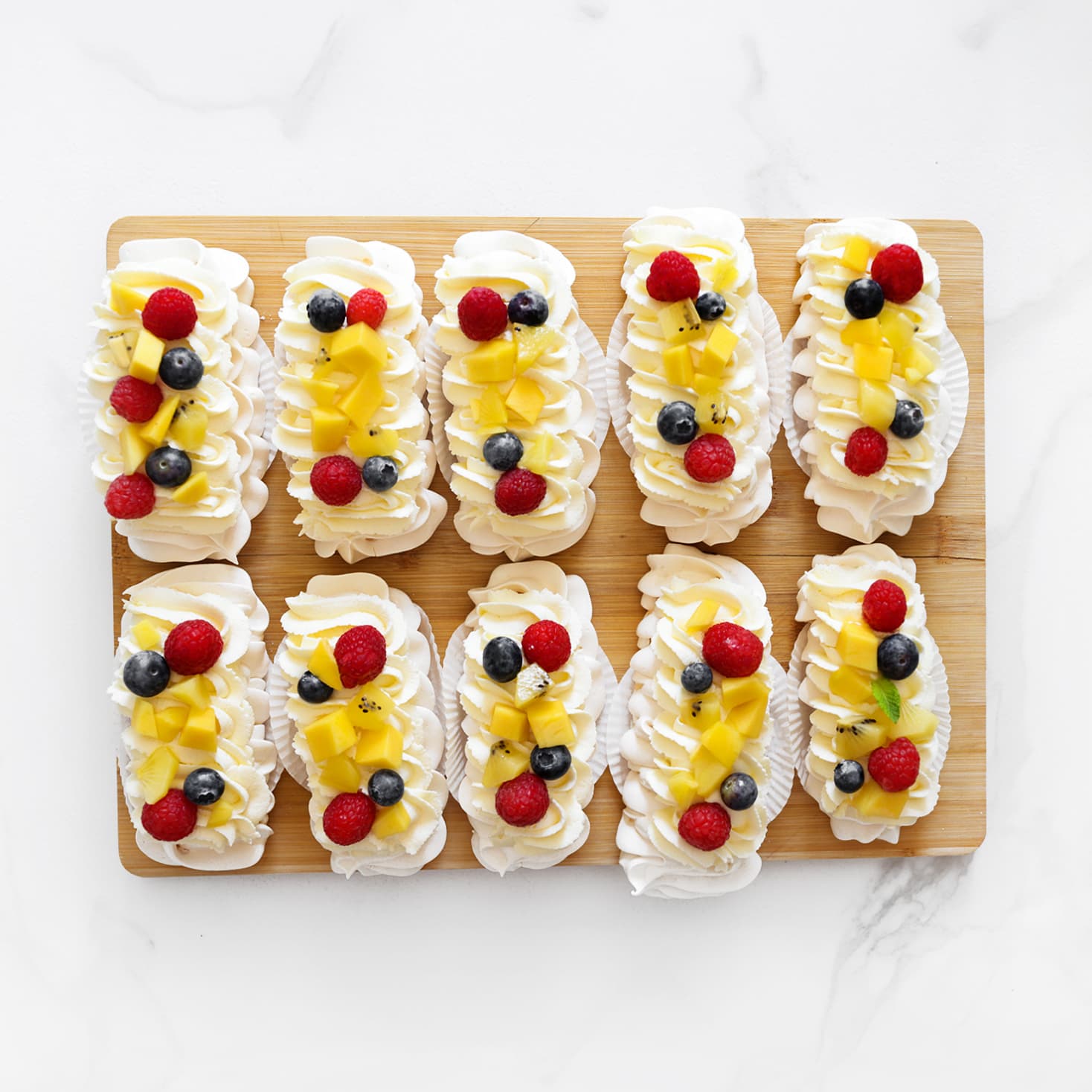
Place the cooled pavlova on a serving platter. Pipe the cream on top and garnish with fresh fruit of your choice. Think strawberries, raspberries, blueberries, kiwi, or mango for a fresh and colorful topping.
Veelgestelde vragen
Is pavlova gluten-free?
Yes, pavlova is naturally gluten-free because it does not contain flour. That also makes this dessert suitable for people with gluten intolerance or celiac disease.
Why does my pavlova collapse?
A pavlova can collapse if the egg whites are not whipped stiff enough or if you open the oven during baking. Make sure you whip them to firm peaks and keep the oven closed while it bakes.
How do I know if my egg whites are stiff enough?
Your egg whites are ready when you can lift firm peaks that hold their shape and you no longer feel any sugar crystals when rubbing the mixture between your fingers.
Why is there vinegar in pavlova?
Vinegar helps stabilize the egg white foam and gives pavlova its soft, marshmallow-like center.
Can I replace the cornstarch?
Yes, but it is not recommended. Cornstarch helps create a softer center. Without it, your pavlova will often be a bit crisper and drier inside.
Is pavlova the same as meringue?
Not exactly. Pavlova is similar, but it also contains cornstarch and vinegar. That gives pavlova its signature soft center, while a regular meringue is usually drier and crispier.
Related recipes
Pavlova with Mascarpone Cream
Ingredients
| Instructions
|
1 Comment
Heb jij dit recept gemaakt?
Laat anderen weten wat je ervan vond.
Thank you for the recipe