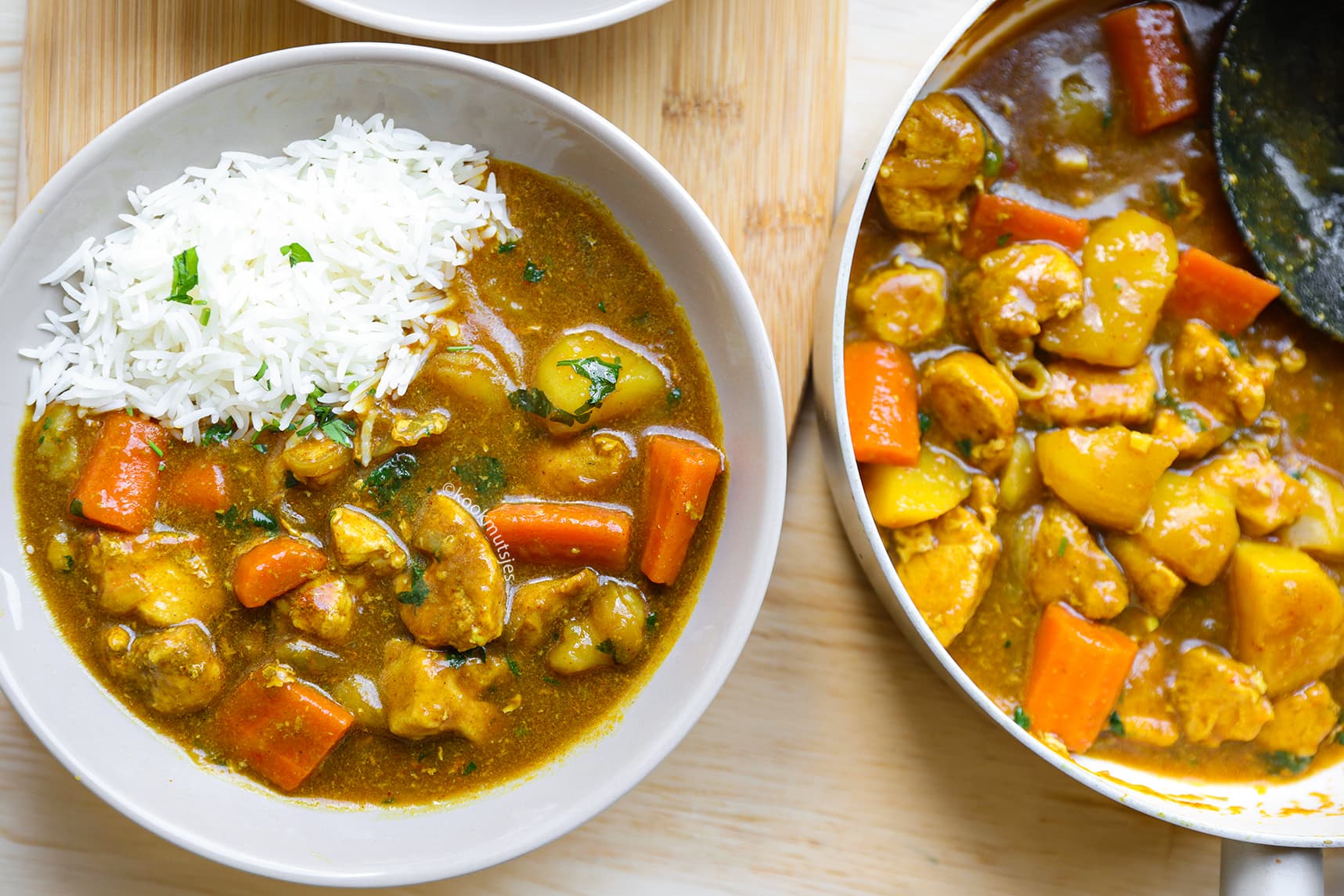
Japanese Chicken Curry

Najat
Photo by Najat
Japanese curry with chicken is the ultimate comfort food. With tender pieces of chicken, carrots, and potatoes, all cooked in a thick curry sauce. Finish it off by serving it with white rice for a complete meal. The dish is mild in flavor, easy to make, and tastes even better the next day.
What is Japanese curry and where does it come from?
Japanese curry, known in Japan as karē raisu (curry rice), is one of the most widely eaten dishes in Japan. It is so popular that many Japanese people eat it regularly. Like many dishes that become deeply rooted in a national cuisine, Japanese curry is the result of different food cultures coming together. Curry was introduced to Japan in the late 19th century by the British, who were inspired by Indian cuisine. The Japanese adapted it to their own taste. Today, Japanese curry rice is an inseparable part of Japanese food culture and appears on the menus of school canteens, restaurants, and in homes throughout Japan.
What makes Japanese curry different from other curries?
Japanese curry is quite different from Indian or Thai curry. The sauce is thicker and has a sweet and savoury flavour. That sweetness comes from ingredients like onion, carrot, apple, and honey, which cook down slowly into the sauce. The curry is much milder than other curries, which makes it ideal for children and those who prefer less heat. The sauce is closer to a hearty stew than a traditional curry. Love chicken dishes with bold flavours? Then you will also enjoy our chicken in honey sauce, pasta pesto with chicken, chicken dynamite, and chicken tajine.
Japanese curry roux: blocks or homemade?
The curry roux is the heart of this dish. In Asian supermarkets, and increasingly in regular supermarkets, you can find ready-made Japanese curry roux blocks. These Japanese curry cubes contain all the spices and thickeners you need, simply add them to your chicken and vegetables with water, and within minutes you have a rich curry sauce. The blocks come in different spice levels: mild, medium, and hot. Even the hot variety is relatively mild compared to Indian or Thai curry. Prefer to make it from scratch without curry blocks? Just like in this recipe, you can make your own roux using butter, flour, and a blend of spices. You will find exactly how to do this in the recipe below.
How to store and reheat Japanese curry
Japanese chicken curry is perfect for meal prep because it tastes even better the next day as the flavours continue to develop. Store the curry in the fridge in an airtight container for up to 3 days. Want to freeze it? That works well for up to one month, but remove the potato pieces first. Potatoes develop a spongy texture after freezing, and that is not what you want. Freeze the curry in individual portion bags so you can easily defrost one serving at a time. When reheating, the sauce will thicken further, so always add a splash of water before warming it up. Heat on low and stir regularly to prevent it from sticking to the bottom of the pan.
Ingredients
CURRY
CORNSTARCH MIXTURE
Tips
Use chicken thighs instead of chicken breast if you want extra tender and juicy meat. Chicken thighs stay soft while simmering and add more flavor to the sauce.
Briefly cook the spices with the chicken. This releases their aromas and gives the curry a deeper flavor.
Finely grate the apple before adding it. It melts into the sauce while cooking, adding a subtle sweetness and extra creaminess.
Cut the potatoes and carrots into equal-sized pieces.
Let the curry simmer gently with the lid halfway on the pan. This helps the sauce thicken slowly while the flavors blend well.
Stir regularly along the bottom of the pan to prevent the sauce from sticking, especially toward the end of cooking.
Add the cornstarch mixture little by little while stirring. This allows you to control how thick you want the sauce and prevents lumps.
Let the curry rest for five minutes after cooking. The sauce will usually thicken a little more and the flavors become fuller.
Japanese curry is best served with warm white rice. The rice absorbs the sauce well and completes the dish.
Store leftovers in the refrigerator, as Japanese curry often tastes even better the next day when the flavors have developed further.
Instructions
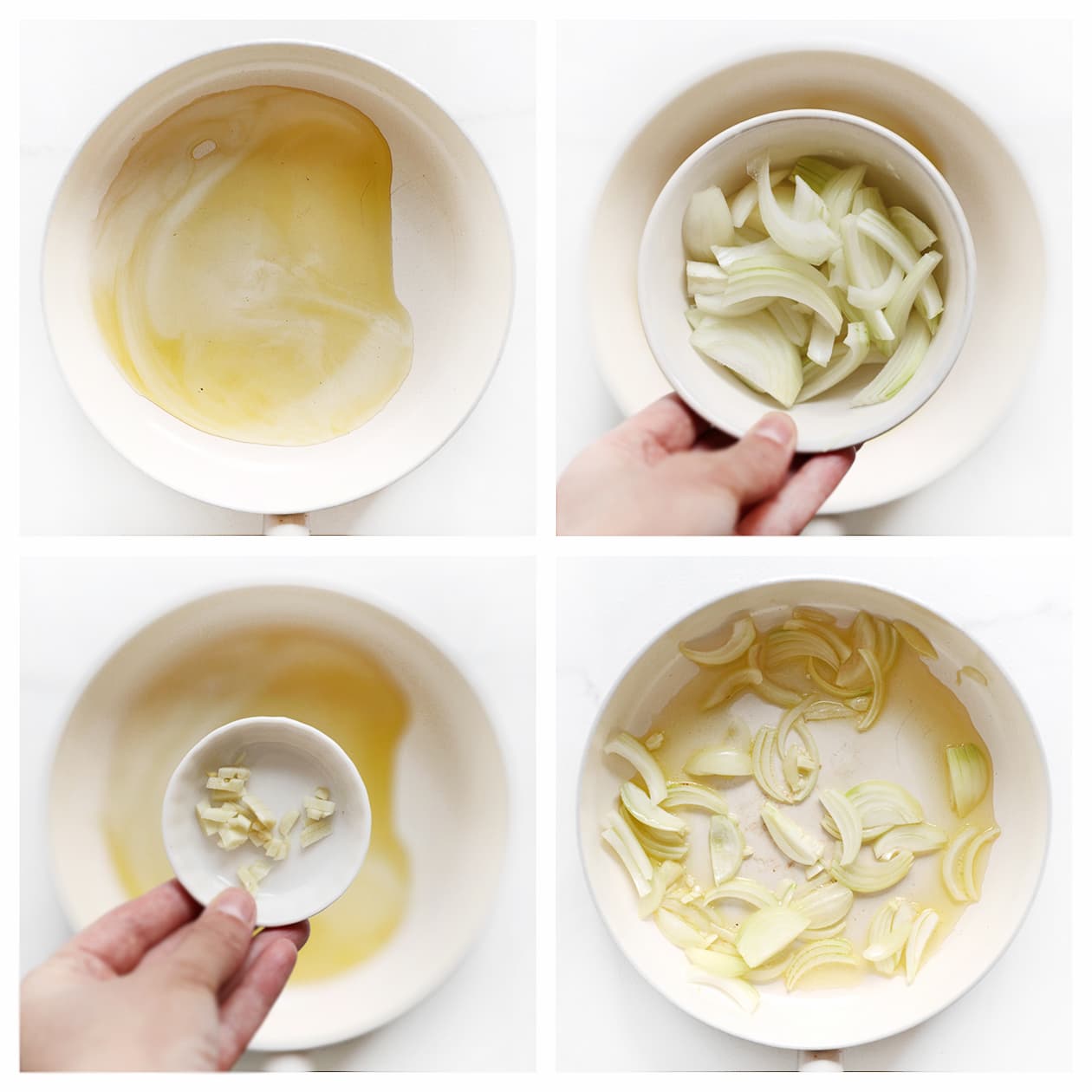
Heat the olive oil in a sauté pan over medium-high heat. Add the diced onion and finely chopped garlic. Cook for 3-4 minutes.
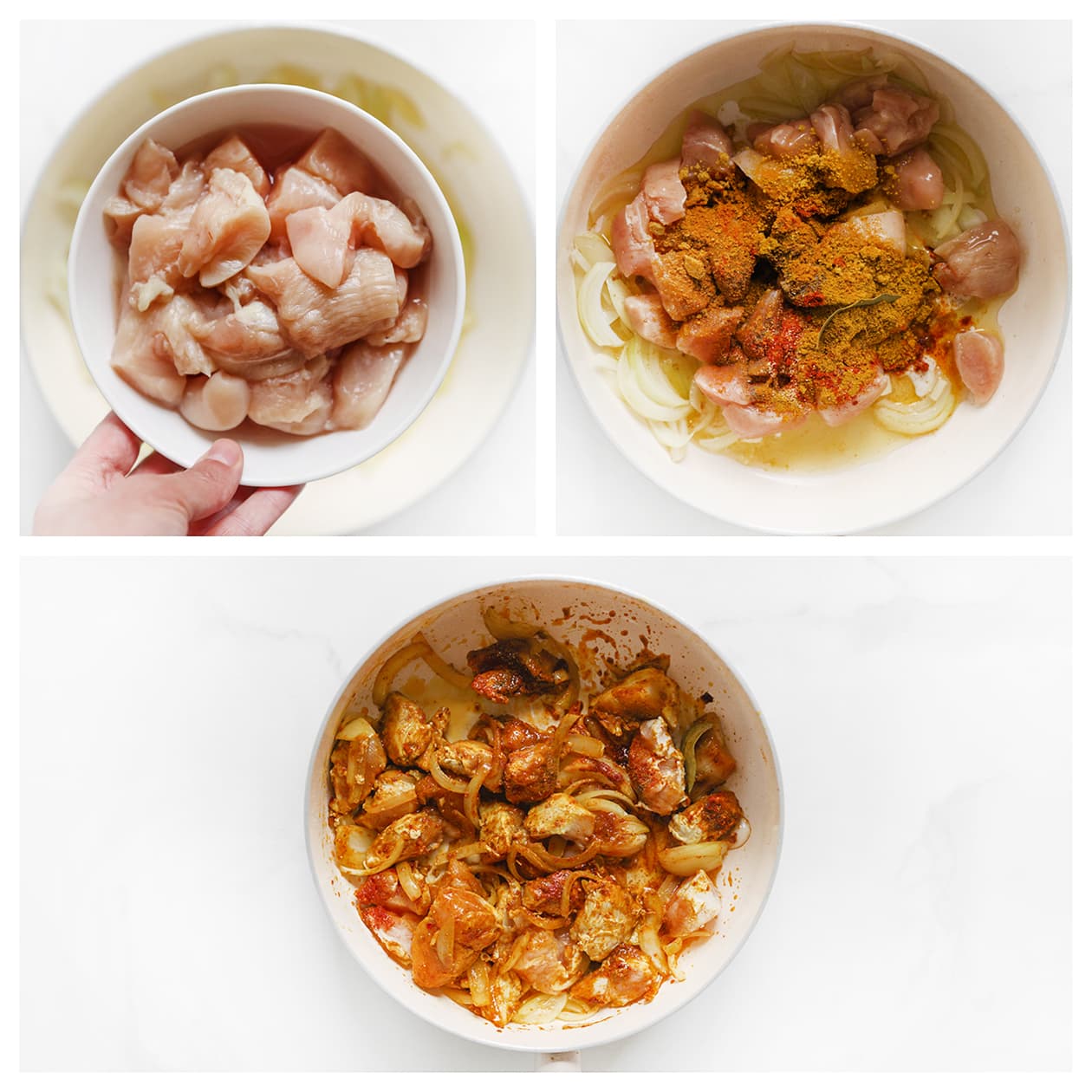
Add the chicken thigh pieces along with the curry powder, garam masala, cayenne pepper, coriander powder, ginger powder, bay leaf and crumbled stock cube. Cook for a few minutes until the chicken is lightly browned on the outside.
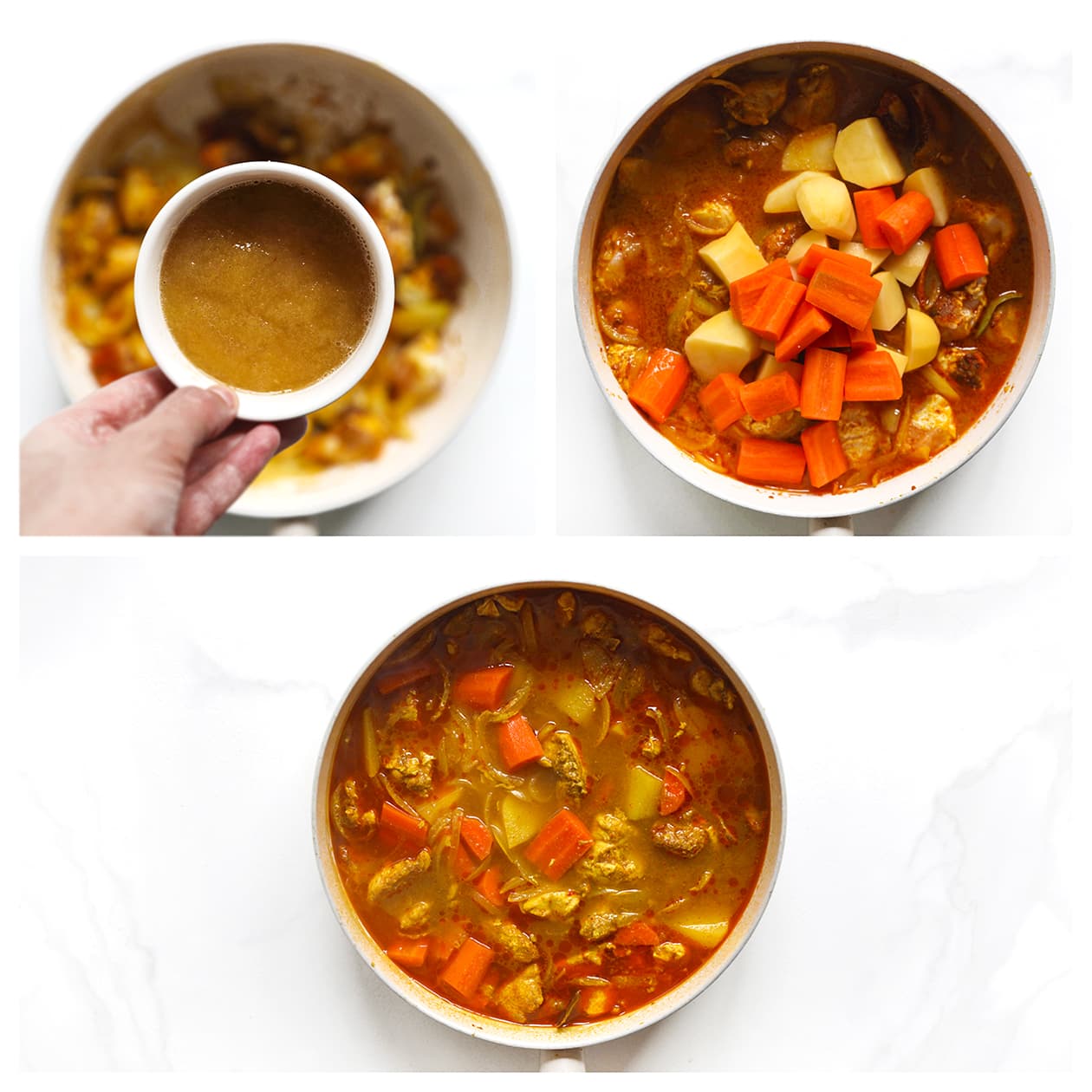
Add the grated apple, potatoes and carrots. Pour in the water (450 ml) and bring to a boil. Reduce the heat and let the Japanese curry simmer gently for 20-25 minutes with the lid half on the pan, stirring occasionally, until the vegetables are tender and the chicken is cooked through.
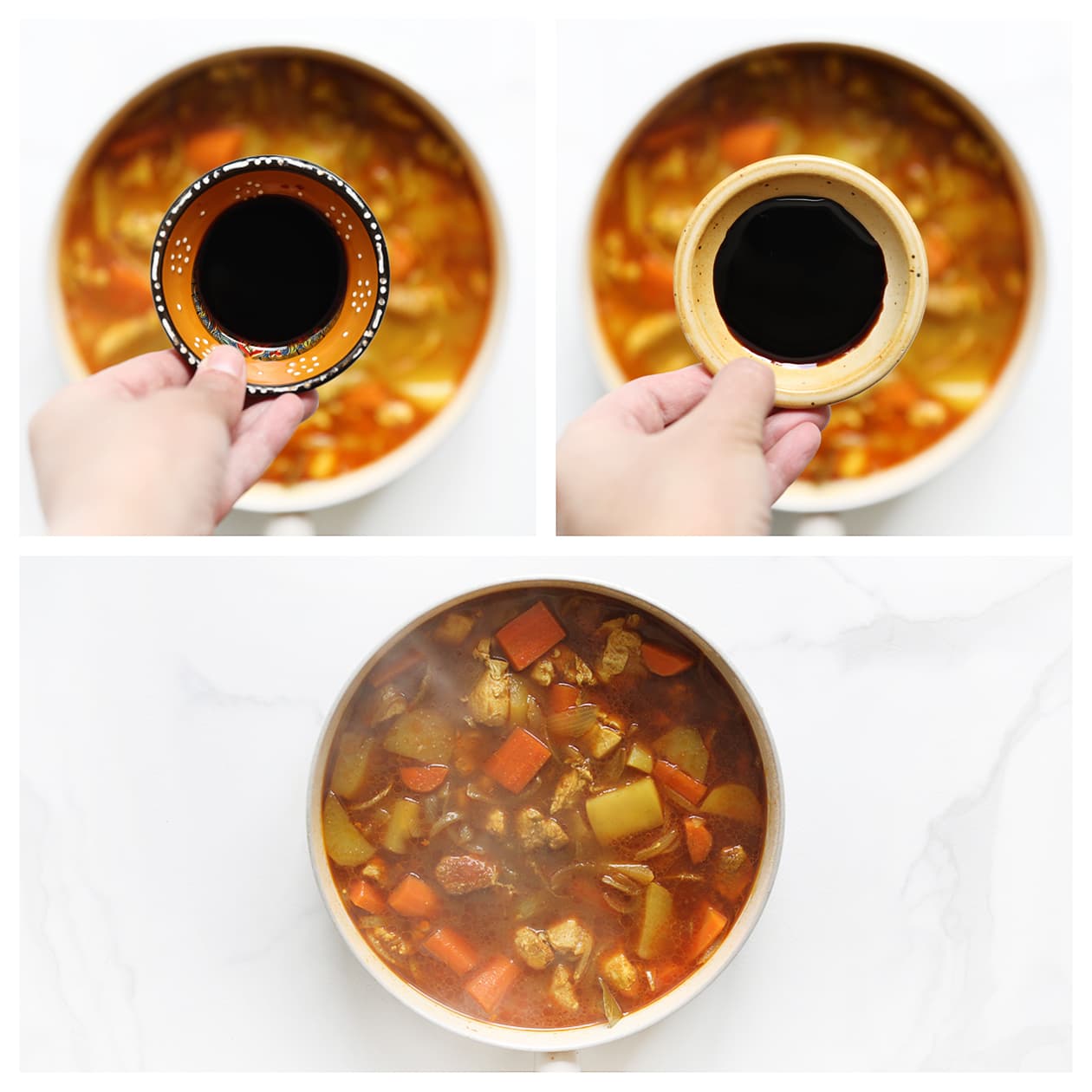
Add the soy sauce and ketjap manis. Stir well and season further with salt and black pepper.
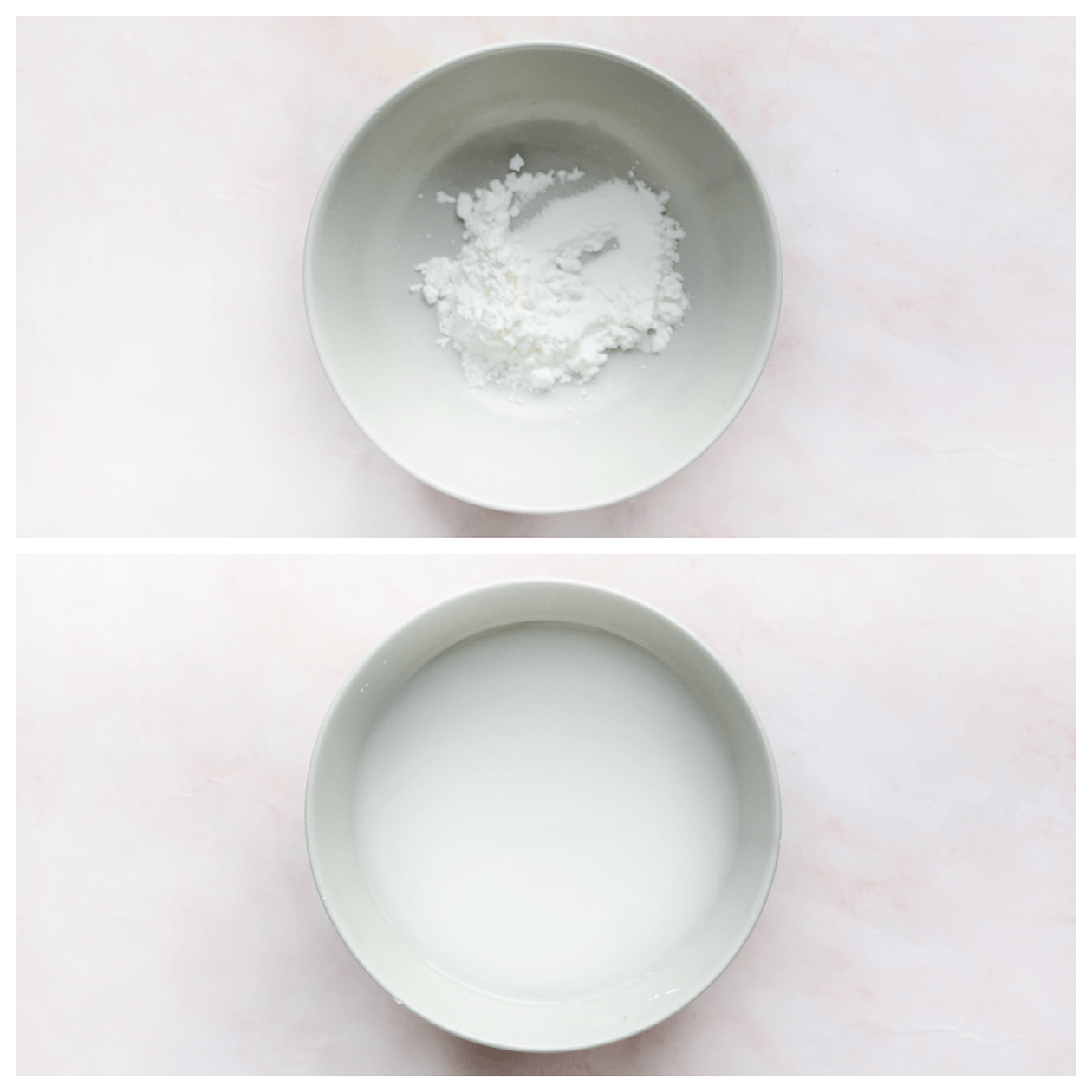
In a small bowl, mix the cornstarch with 50 ml of water until smooth.
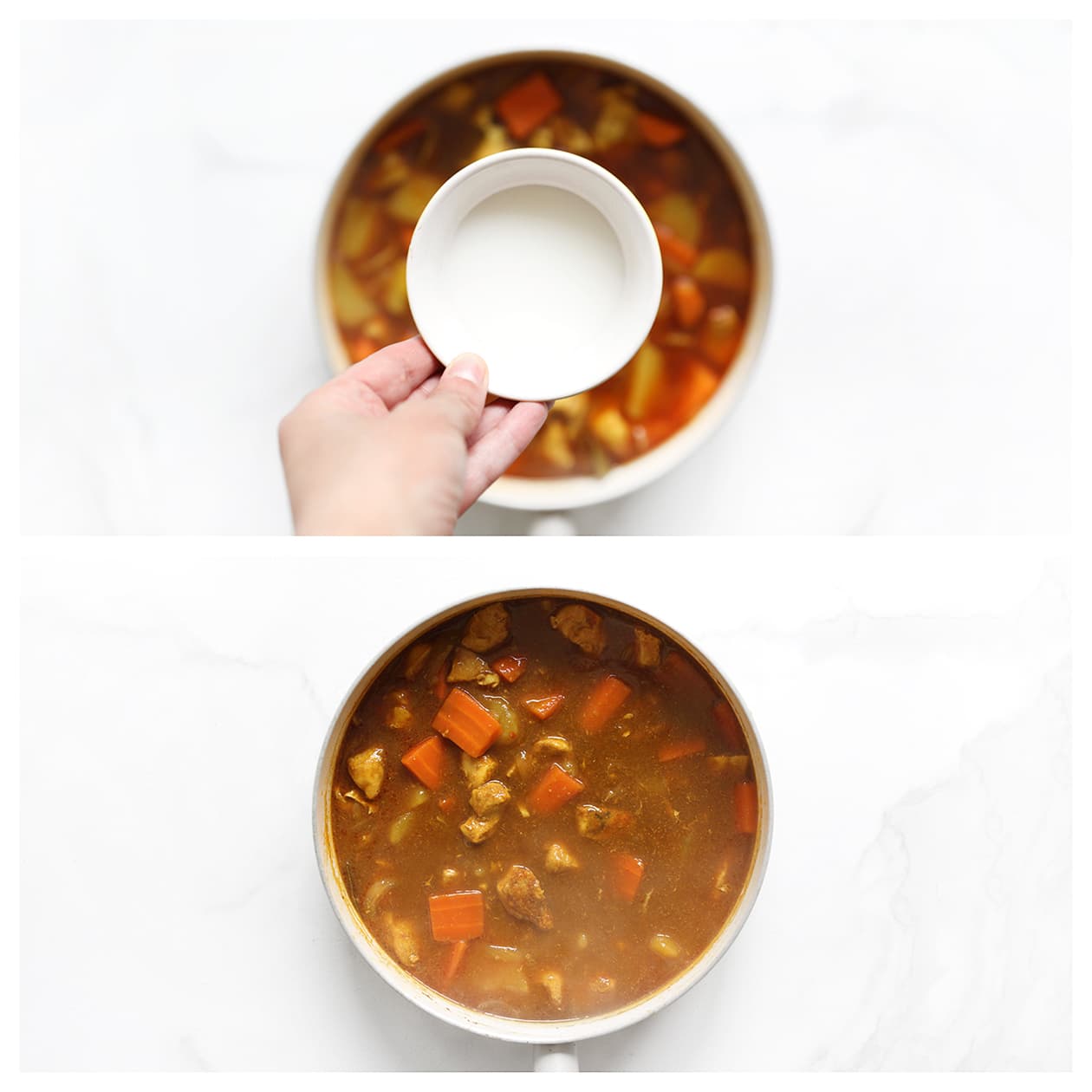
While stirring, add the cornstarch mixture to the curry until the sauce thickens nicely and has a glossy finish. Let it simmer gently for 2-3 minutes.

Serve the Japanese curry warm with white rice, naan bread or freshly baked rolls.
Veelgestelde vragen
Is Japanese curry spicy?
Can I make Japanese curry without ready-made curry blocks?
Yes, this recipe is a homemade Japanese curry without ready-made blocks. With spices, stock, and fresh ingredients, you can easily make a delicious sauce yourself.
Which chicken should I use for Japanese curry?
Chicken thighs are ideal for Japanese curry because they stay tender and juicy while cooking. Chicken breast can also be used, but it tends to dry out more quickly.
Can I make Japanese curry vegetarian?
Yes, replace the chicken with chickpeas, tofu, vegetarian pieces, or extra vegetables such as cauliflower, mushrooms, or zucchini.
What do you serve with Japanese curry?
Japanese curry is traditionally served with white rice. It also tastes delicious with noodles, naan, or freshly baked rolls.
Can I make Japanese curry in advance?
Yes, Japanese curry is perfect to make ahead of time. The flavors develop even more, which often makes the dish taste even better the next day.
Related recipes


Japanese Chicken Curry
Ingredients
| Instructions
|
0 Comments
Heb jij dit recept gemaakt?
Laat anderen weten wat je ervan vond.